
TL;DR: how to register copyright
Your 3D art is protected by copyright the moment you create it, but registering copyright gives you the power to enforce it. In the US, you register online with the U.S. Copyright Office (eCO): choose the right application, fill in the author and publication details, pay the fee ($45 to $65 today, $55 to $85 under the fee schedule the Office plans to apply from late 2026) and upload images of your work. A clean online claim takes about 1 to 2 months.
Register before an infringement starts, or within 3 months of publishing, to keep statutory damages and attorney's fees on the table. Most other countries, including the UK and most of the EU, have no official copyright register, so there you protect yourself with dated proof of creation instead. This guide covers both, with the details that matter for Blender and 3D work.
Key takeaways
- Copyright is automatic; registration is optional. But in the US you cannot sue over a US work until the Copyright Office has registered it or refused it.
- The 3-month rule decides your damages: register before infringement or within 3 months of publication, or you lose statutory damages (up to $150,000 per work for willful infringement) and attorney's fees.
- For 3D work, upload renders or turntable images as your deposit. The Copyright Office does not accept .blend files.
- Group options save money: up to 10 unpublished works or 20 published 2D artworks (such as renders) in one application.
- Outside the US, the UK and most EU countries have no copyright register. A dated proof of creation, such as a blockchain certificate, is how you show you made it first.
Do you need to register copyright?
No. Under the Berne Convention, which more than 180 countries have signed, copyright arises automatically as soon as an original work is fixed in a tangible form. A Blender scene saved to disk, an exported mesh or a rendered image is already protected. You do not need a © symbol, a filing or a fee. If you want one anyway, here are copyright notice examples you can copy. For the fundamentals, see copyright basics for 3D artists and do 3D models automatically have copyright protection?.
Registration matters when you need to enforce that right. A registered work comes with a public record, an official certificate and, in the US, access to the courts and to much higher damages. That is why every serious guide on copyright registration for digital art ends with the same advice: register the work you would actually fight for.
When registering copyright is worth it
What registering copyright gets you
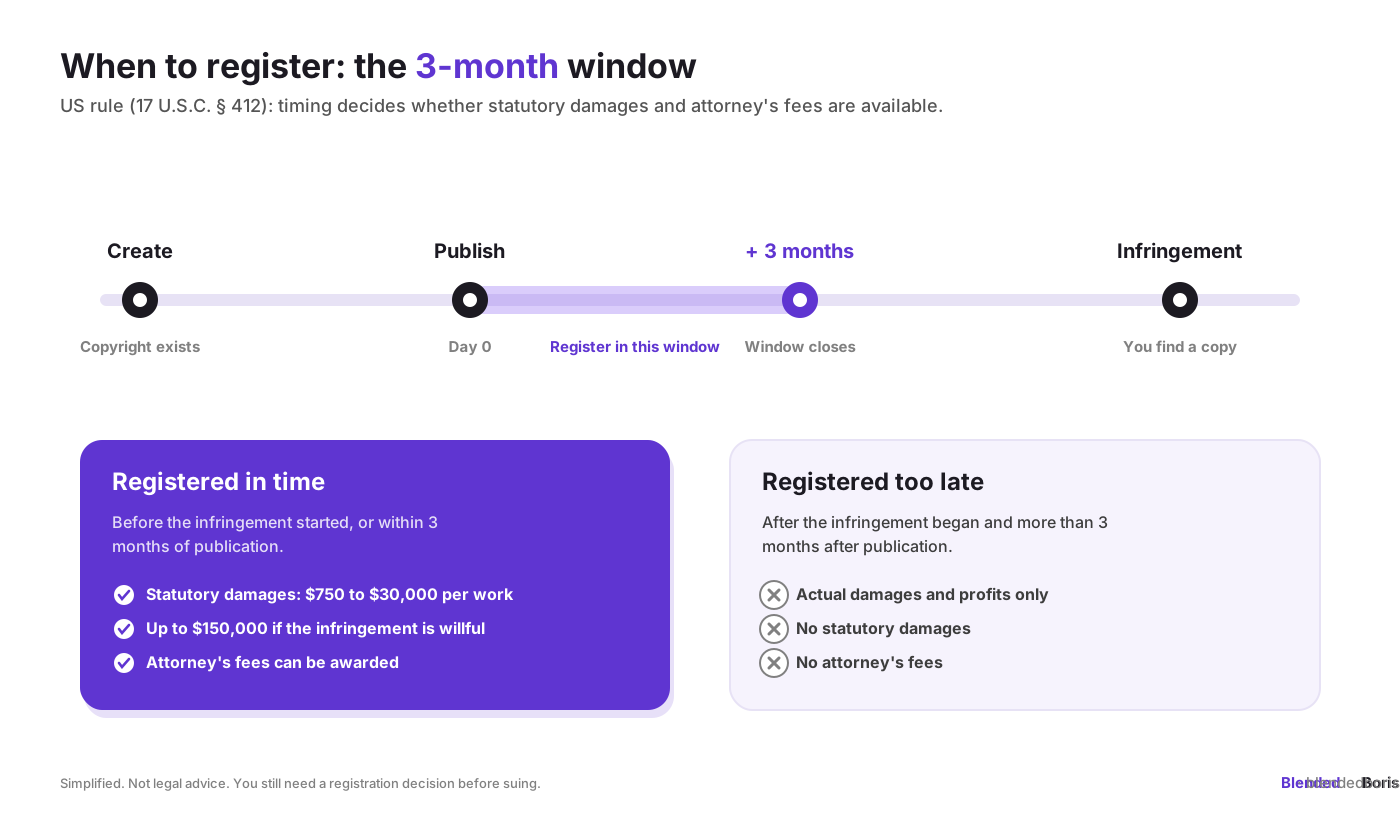
The timing rule sits in section 412 of the US Copyright Act: statutory damages and attorney's fees are only available if the work was registered before the infringement began, or within three months of first publication. Since the Supreme Court's 2019 Fourth Estate decision, an application alone is not enough to sue; you need the Office's decision. If you are in a hurry, the Office's special handling service speeds up a claim for an extra fee. To understand what a case costs before you start one, read copyright litigation costs in 2026 and the overview of legal remedies for digital art infringement.
Small claims are the realistic route for most artists. The Copyright Claims Board hears claims of up to $30,000 for a $100 filing fee, without a lawyer. Statutory damages there are capped at $15,000 per work for works registered in time, and $7,500 per work for works that were not.
How to register copyright in the US, step by step
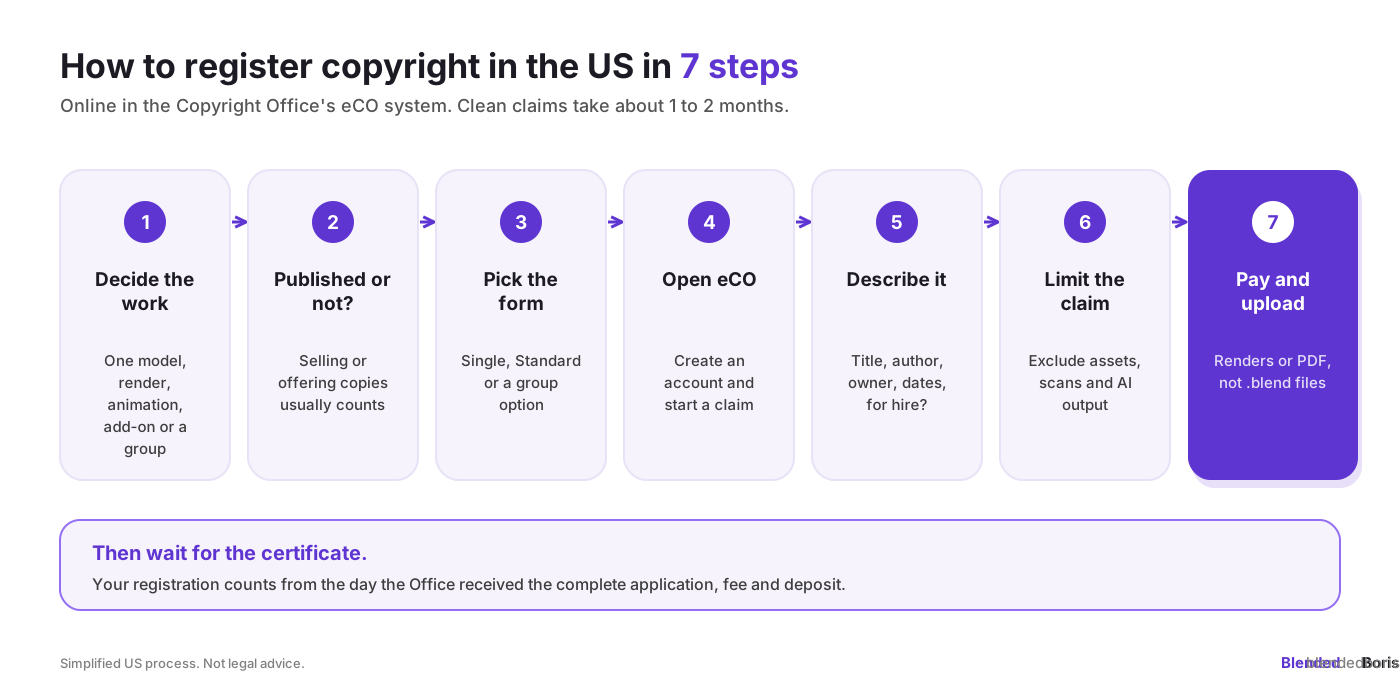
- Decide what you are registering. One model, one render, an animation, a set of unpublished works, or the code of an add-on. Each is a different work type (see the table below).
- Check if it is published. Selling or offering copies to the public (on a marketplace, for download) usually counts as publication. Posting a render to a social feed may or may not, so if in doubt, describe the facts carefully and get advice.
- Choose the application. The Single Application is for one work by one author who is also the owner, not made for hire. Everything else uses the Standard Application or a group option.
- Create an eCO account on the Copyright Office registration portal and start a new claim.
- Fill in the details: title, author, claimant (owner), year of completion, date and country of first publication, and whether it is a work made for hire.
- Limit the claim. Exclude anything you did not create: CC0 textures, bought kitbash parts, scanned data, a client's concept art, and any AI-generated material that is more than trivial.
- Pay and upload the deposit. For 3D work, upload images that show the whole work: renders from several angles, a turntable contact sheet or a PDF. Then wait for the certificate.
Which type of work to choose for Blender projects
The Copyright Office lists the file formats it accepts, and native project files such as .blend are not among them, so always convert to images, PDF or video. Each uploaded file can be up to 500 MB. The group option for 2D artwork, open since 17 February 2026, is new and useful for render-heavy portfolios: up to 20 published works by the same author, first published in the same calendar year, in one claim.
How much does it cost to register copyright?
Government fees are low compared to the protection they buy, but they are about to rise. On 14 July 2026 the Copyright Office sent Congress its first new fee schedule since 2020, and plans to apply it in fall 2026. The Office can introduce the new fees 120 days after submission unless Congress objects, which points to mid-November 2026. Check the Copyright Office fee study for the date the new fees take effect.
If you have a backlog of finished work to register, file before the new fees apply. Grouping unpublished renders or models before you release them is the cheapest way to cover a whole project: one claim, one fee, up to ten works. Weigh these costs against the alternatives in blockchain vs traditional copyright costs and blockchain vs legal registration costs.
How long does copyright registration take?
For online claims with an electronic deposit and no follow-up questions, the Copyright Office reports an average of about 1.2 months. Claims that need correspondence, for example to fix the type of work or the claim limitation, take around 3.5 months, and paper applications take about 4 months. Your registration's effective date is the day the Office received the complete application, fee and deposit, not the day the certificate arrives, so file as soon as you can.
Registering AI-assisted 3D art
Copyright only protects human authorship. If you used AI to generate textures, concept images or base meshes, you must say so in the application and exclude any AI-generated material that is more than minimal, while claiming your own modeling, sculpting, arrangement and edits. The US Supreme Court declined in March 2026 to hear Thaler v. Perlmutter, leaving in place the rule that a purely AI-generated work cannot be registered. More detail: AI-generated art and copyright in 2026 and can AI-generated art be copyrighted?.
How to register copyright outside the US
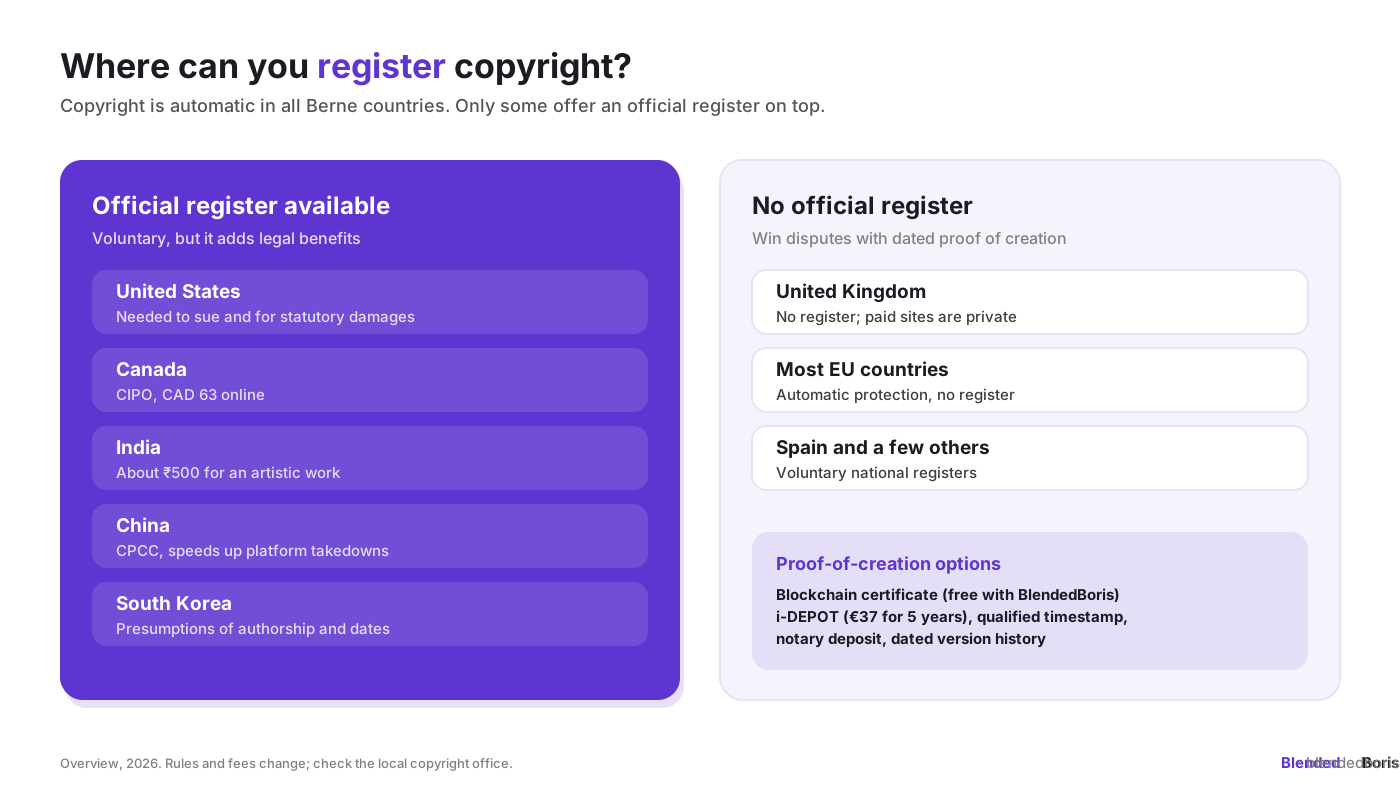
Because protection is automatic across the Berne system, a US registration also helps a European artist whose work is copied by a US seller. Plan by market: register where you sell and enforce, and keep proof of creation everywhere. See international copyright protection for Blender artists and international copyright protection for the treaty side.
No register? How to prove you created it
Where there is no official register, the person with the best evidence of when they created a work usually wins. Courts look for independent, dated records that cannot be edited after the fact. Your options:
WIPO, the UN agency for intellectual property, ran its own timestamping service, WIPO PROOF, but closed it to new tokens in January 2022, which leaves artists with national and private options. Blockchain records are increasingly accepted as evidence; read blockchain evidence in IP litigation for how courts treat them, and immutable proof of art creation for the technical background. Good habits help too: version control in Blender projects keeps the process evidence that supports any certificate.
Copyright registration vs blockchain certificate
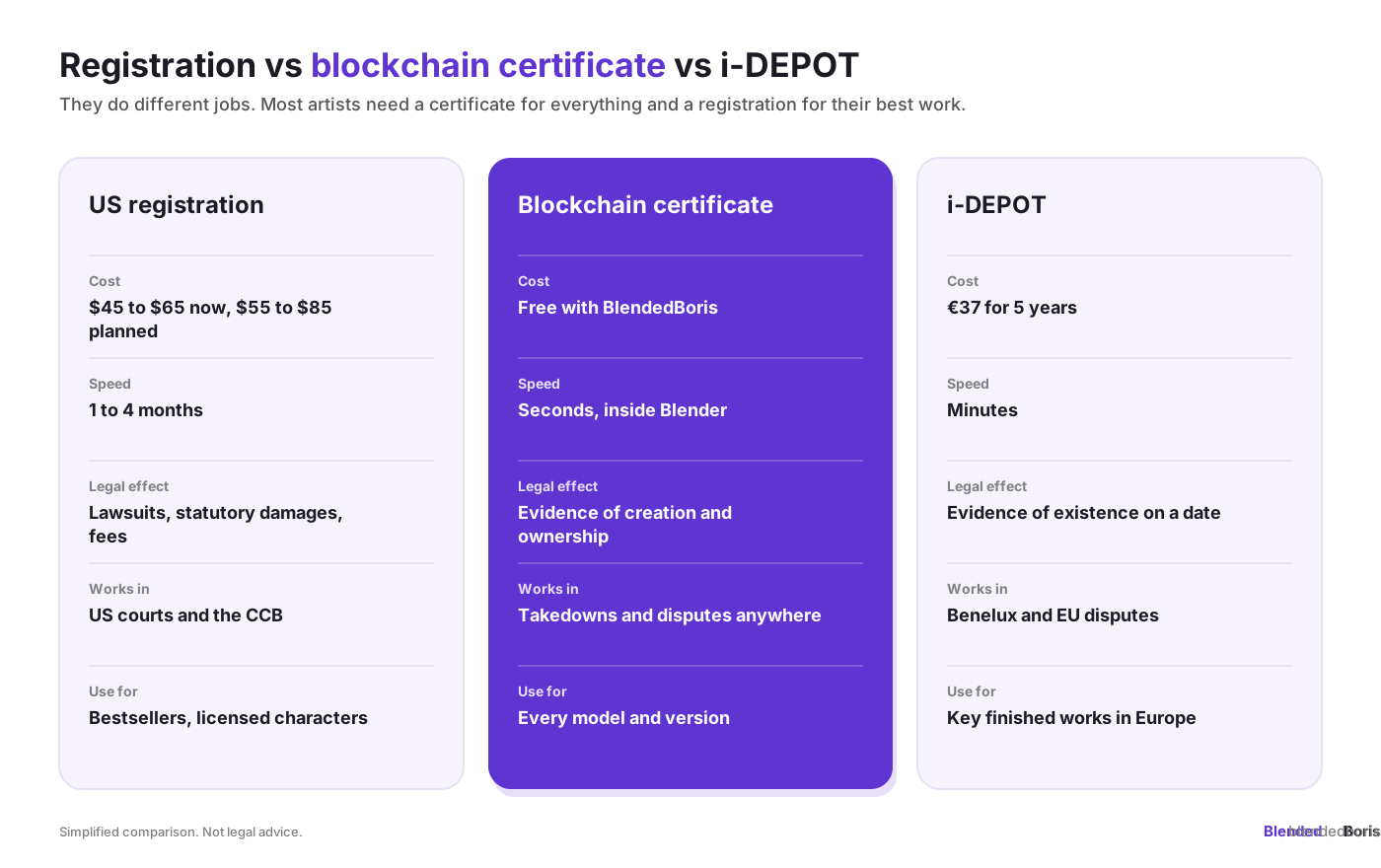
A blockchain certificate is not a government registration, and a registration is not proof of when you first created something. Used together, they cover each other's gaps. For more on the trade-offs, see blockchain copyright registration benefits and drawbacks, digital certificates for artwork and blockchain vs traditional copyright registration.
A copyright registration workflow for Blender artists
- Certify as you create. Register each model and major version with a blockchain certificate from inside Blender, so every stage has a fixed date.
- Keep your process files. Dated .blend versions, reference boards and renders show how the work evolved. See how to save and back up Blender projects.
- Pick what to register officially. Before a release, choose the works that carry real money: bestsellers, licensed characters, client hero assets.
- Group before you publish. Register up to ten unpublished works in one claim, or up to twenty published renders in one GR2D claim. Which option fits each kind of artwork, from renders to 3D models, is covered in art registration for 3D and digital artists.
- Mind the 3-month window. If a work is already published, register it within three months to keep statutory damages and fees.
- Enforce in steps. Start with a takedown notice, then a cease-and-desist letter, then the Copyright Claims Board or court. See the DMCA takedown guide for artists and how to write a cease-and-desist letter.
A ready-made version of this routine is in the Blender copyright workflow and the digital art copyright checklist.
Register every Blender model in seconds, for free. BlendedBoris is a free plugin for Blender that records your 3D model on the blockchain and gives you a lifetime ownership certificate you can share, frame or attach to a takedown notice. It creates a digital fingerprint that links the model to you, so you have dated proof of authorship for every version, in every country, while you decide which works to register officially.
👉 Get the free BlendedBoris plugin
Setup takes a few minutes: see the BlendedBoris plugin tutorial.
Common mistakes when registering copyright
- Waiting until after the theft. You can still register, but you lose statutory damages and attorney's fees for that infringement.
- Using the Single Application wrongly. It only fits one work by one author who owns it and did not make it for hire. Client work and team projects need the Standard Application.
- Claiming what you did not make. Bought assets, CC0 textures from libraries such as those in free texture resources for Blender, scans and AI output must be excluded from the claim.
- Uploading the wrong files. A .blend file cannot be opened by the Office; upload renders, PDFs or video.
- Registering a whole marketplace pack as one work when its parts were published at different times. Use group options correctly or file separately.
- Forgetting privacy. Names and addresses in the application become public. Use a business address or a P.O. box.
- Paying for fake registration. In countries without a register, paid "official copyright registration" sites only give you a private record.
Not sure if you need professional help? Read when to hire an IP attorney as a digital artist.
Copyright registration in numbers (2026)
Conclusion
Registering copyright is a business decision, not a formality. Your Blender work is protected from the moment you save it, but only a registration lets you sue in the US and claim real damages, and only dated proof lets you win the "who made it first" argument anywhere else. Certify everything as you create, register the works that make you money before you publish or within three months after, and keep your process files. Then, if someone copies your art, you will have everything you need on day one.
This is general information, not legal advice. Fees and rules change; check the copyright office of your country before filing.
This is general information, not legal advice. Fees and rules change; check the copyright office of your country before filing.
FAQ: registering copyright
How do I register a copyright?
In the US, create an account in the Copyright Office's online system (eCO), choose the right application, enter the work, author and publication details, pay the fee and upload a copy or images of the work. You receive a certificate after review.
How much does it cost to register copyright?
In the US, $45 for the Single Application and $65 for the Standard Application today. Under the schedule the Office plans to apply from fall 2026, those become $55 and $85. Group options cover up to 10 unpublished works or 20 published 2D artworks for one fee.
How long does copyright registration take?
About 1 to 2 months for a clean online claim, around 3 to 4 months if the Office has questions, and longer for paper applications.
Do I need to register copyright to own it?
No. Copyright is automatic from the moment you create and save the work. Registration is what lets you sue in the US and claim statutory damages.
Can I register copyright for free?
Not with the US Copyright Office. You can create free, dated proof of creation with a blockchain certificate such as BlendedBoris, which helps in disputes everywhere but is not a government registration.
Can I register a 3D model?
Yes. Register it as a work of the visual arts and upload renders that show all its creative features from several angles.
Can I register many works at once?
Yes. Use the group option for up to 10 unpublished works, or the group option for up to 20 published two-dimensional artworks such as renders.
Can I register copyright in the UK or the EU?
The UK and most EU countries have no official copyright register. Protection is automatic, and you prove ownership with dated evidence such as an i-DEPOT, a timestamp or a blockchain certificate.
Can I register AI-generated art?
Only the human-made parts. You must disclose AI-generated material and exclude it from the claim; purely AI-generated work cannot be registered in the US.
When should I register my copyright?
Before you publish, or within 3 months of publication, and in any case before you need to sue. Registering early keeps statutory damages and attorney's fees available.


