
TL;DR: art registration
Art registration usually means recording your artwork with a copyright office, an art registry or both. Copyright registration gives you a public record and, in the US, the right to sue and claim statutory damages. An art registry links a work to its maker and owners, which matters when you sell, license or prove a work is genuine.
For digital and 3D artists in 2026 the short version is: register published 2D art and renders in groups of up to 20 for $85 with the new GR2D option (a planned $130 from late 2026), register 3D models with a Standard Application and images of the model, keep a dated record of every version you make, and issue a certificate of authenticity when you sell.
Key takeaways
- Copyright is automatic; registration is optional but decides what you can do in a US court.
- The right option depends on the artwork: 2D art, unpublished work, photos, 3D models and animation each have their own route and fee, from $45 to $85 today, with higher fees planned for late 2026.
- GR2D is new: since 17 February 2026 you can register up to 20 published 2D artworks from the same year for one $85 fee. 3D works are excluded.
- Most countries have no copyright register. Outside the US, artists rely on dated evidence, voluntary registries and certificates.
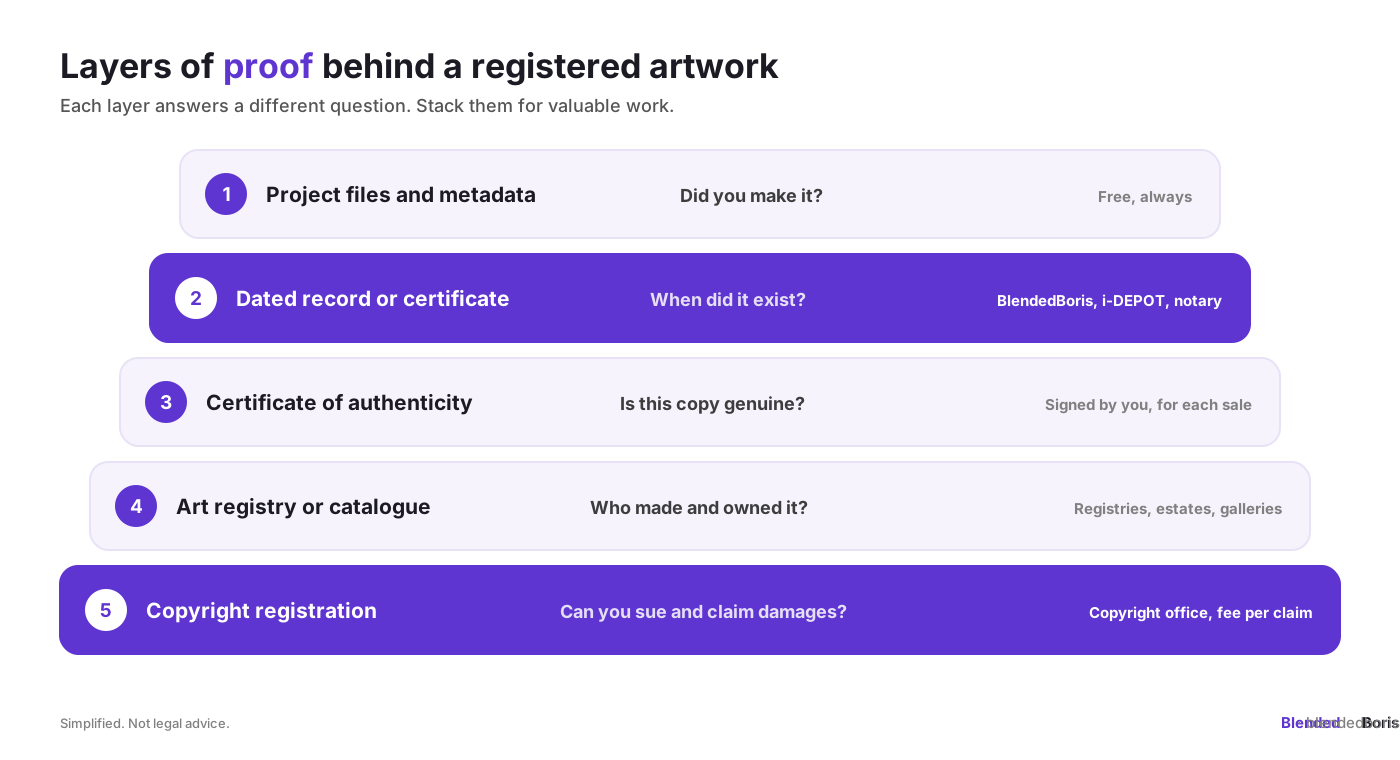
- Registries and certificates prove provenance, not copyright. Valuable work needs both kinds of art registration.
What is art registration?
"Art registration" covers four different things, and search results mix them all. Copyright registration records your rights with a government office. An art registry or provenance record links a specific work to its maker and every later owner. An estate or catalogue raisonné registration is how an artist's foundation confirms a work is genuine. And many shows, festivals and open calls ask you to "register" a work before you can enter it. This guide covers all four, with the most detail on the two that protect you: copyright registration and provenance records.
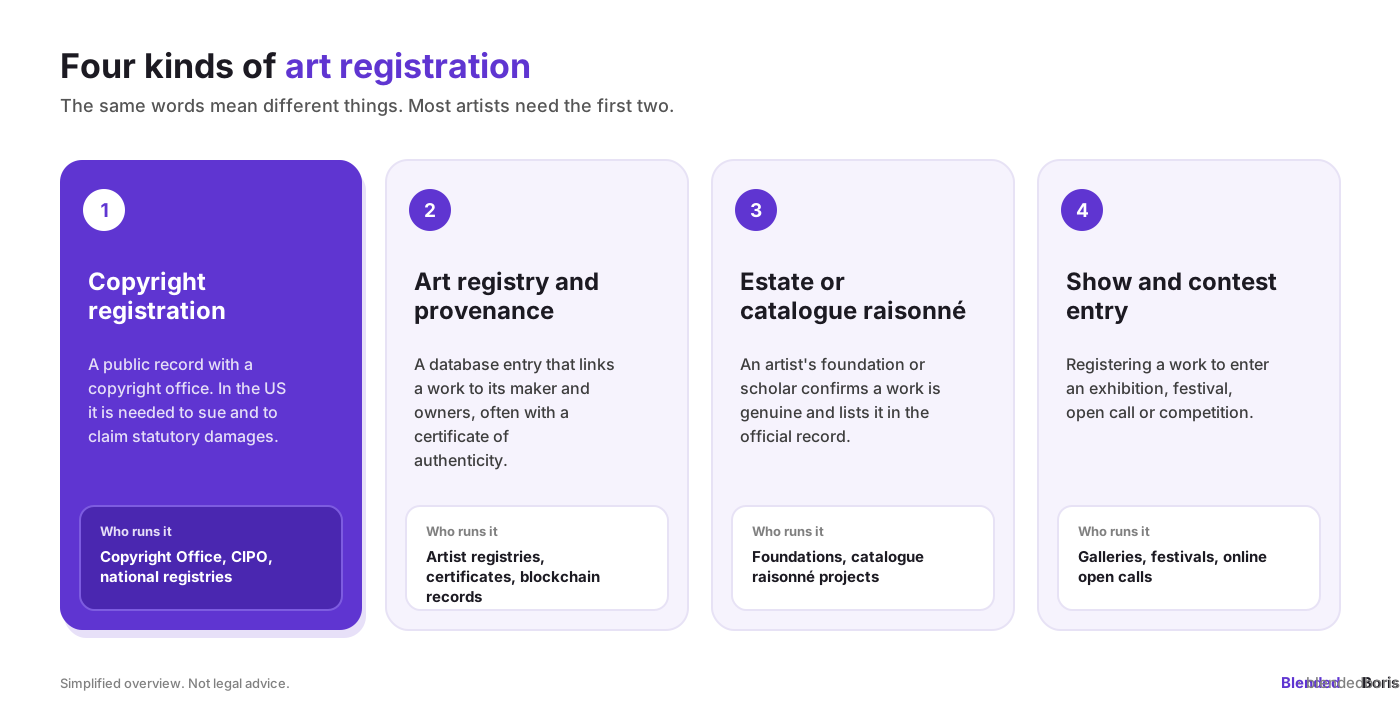
None of these creates your copyright. Under the Berne Convention your work is protected from the moment you create it, as copyright basics for 3D artists explains. Registration adds evidence and, in some countries, legal tools you would not have otherwise.
Copyright registration for artwork
In the US, the Copyright Office treats paintings, drawings, illustrations, digital art, sculpture and 3D models as "works of the visual arts". Registering one gives you a public record, lets you sue for infringement of a US work, and, if you register within three months of publication or before the infringement starts, lets you claim statutory damages of up to $150,000 per work and your legal fees. For the full application walkthrough, see how to register copyright; below is what is specific to art.
Which registration option fits your artwork?
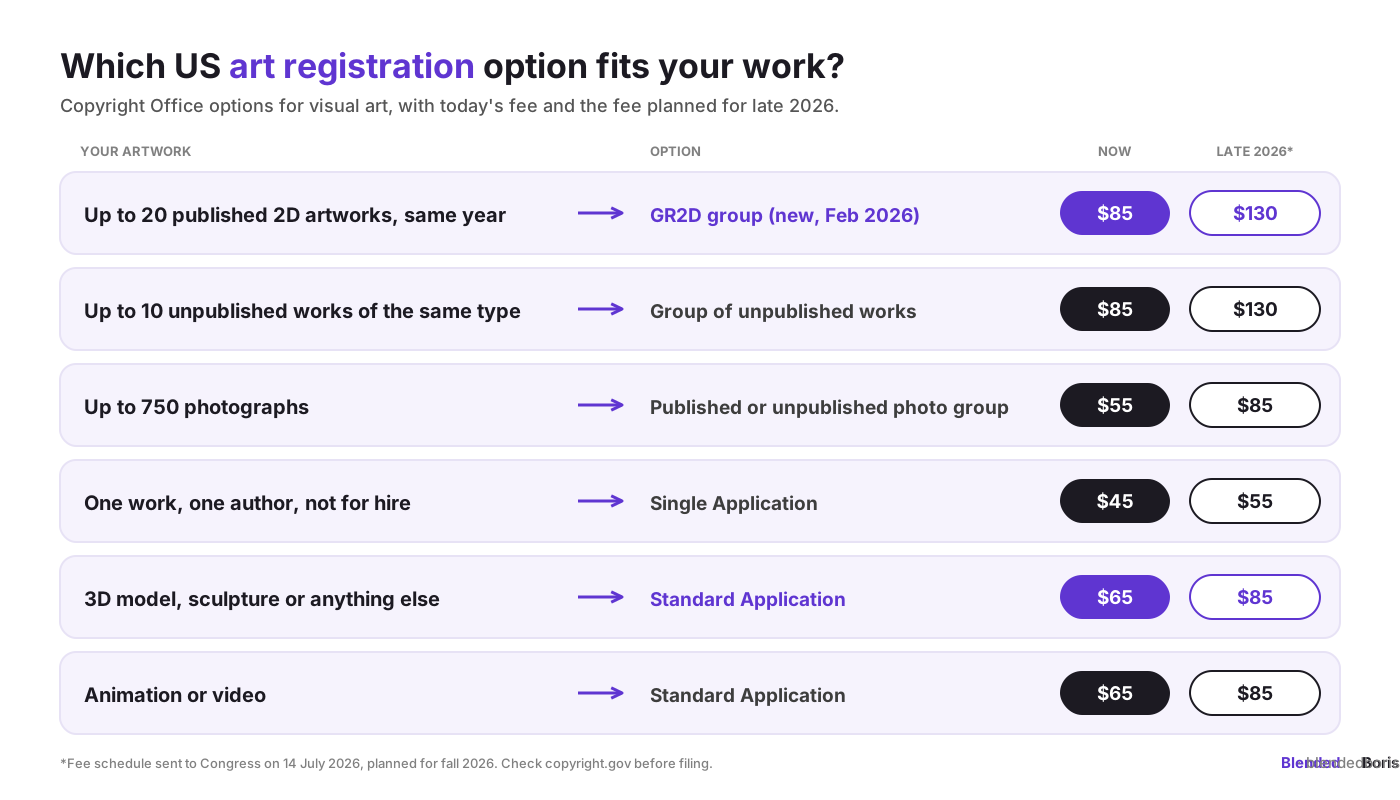
GR2D is the biggest change for visual artists in years. It went live on 17 February 2026, and at 20 works it costs about $4.25 per artwork, compared with $45 or $65 for a single filing. The Copyright Office sent a new fee schedule to Congress on 14 July 2026 and plans to apply it this fall: GR2D and GRUW would then cost $130, the Standard Application $85 and the Single Application $55, so filing before the change saves money. Each work in the group is still treated as a separate work, and each needs its own title. The Copyright Office's GR2D page lists every condition.
Registering 3D art made in Blender
A Blender project usually contains several works, and each is registered in a different way. The model itself is a three-dimensional artwork, so it does not qualify for GR2D. The renders you publish are two-dimensional pictorial works, so they do. Whether the model is protected at all depends on originality: faithful copies of real objects get little protection, as do 3D models automatically have copyright protection? and the copyright cases on 3D replicas show.
Registering a render protects what the render shows, but registering the model separately makes your claim to the 3D work itself much clearer. For AI-assisted work, describe what you made yourself and exclude AI-generated material in the application, because purely AI-generated content cannot be registered.
What to upload: the deposit
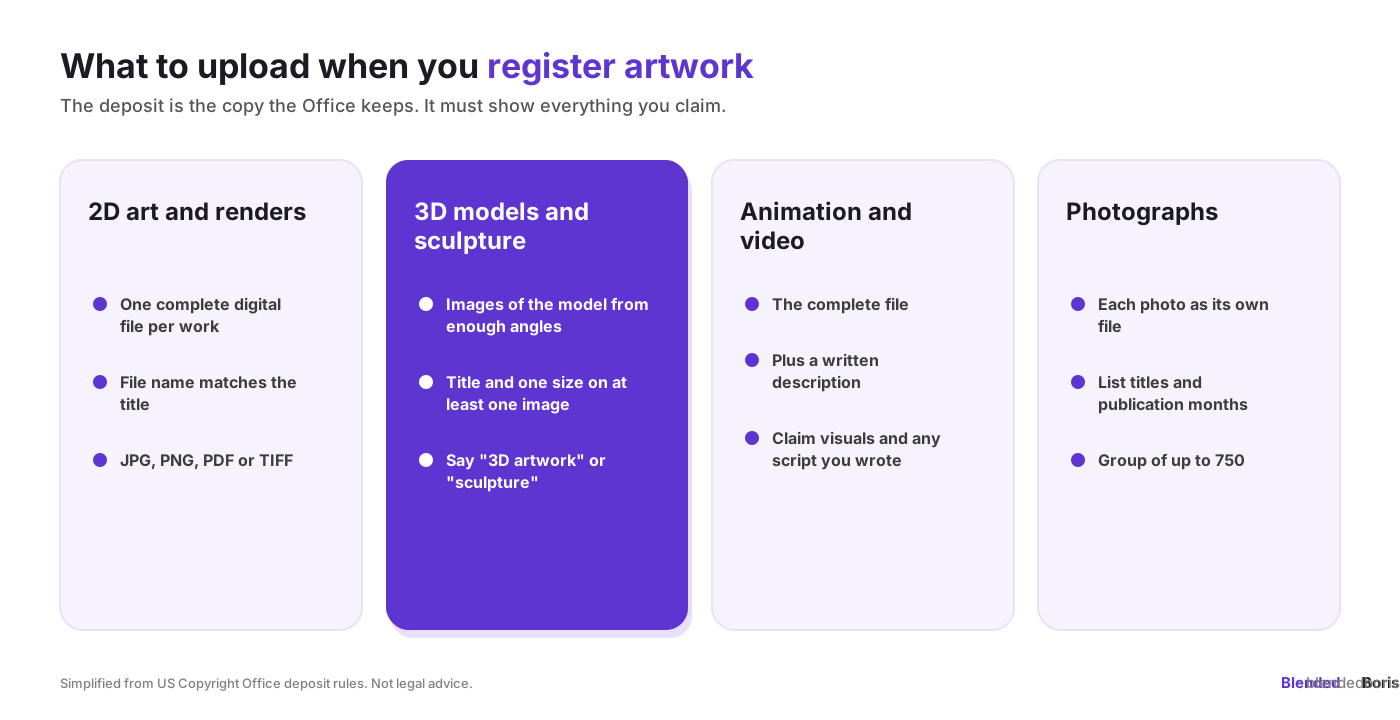
For 3D work, the Office accepts "identifying material": images that show the whole work instead of the object or file itself. For a 3D model, that means clean renders from enough angles to show every protected detail, with the title and at least one dimension on one of them. Tell the Office you are claiming the 3D artwork, not the photograph or render, or it may register the wrong thing. Processing averaged around two months in 2025 for online claims, and longer when the Office has questions. Digital art copyright registration covers file preparation in more detail.
Art registration outside the US
Most countries have no official copyright register for art. Your protection is the same without one, but you have to prove authorship and dates yourself if there is a dispute. These are the main options in 2026:
If you sell worldwide, combine a US registration for your most valuable work with dated evidence for everything else. See international copyright protection for Blender artists and blockchain vs traditional registration.
Art registries, provenance and certificates of authenticity
Provenance is the history of a work: who made it, when, and who has owned it since. Collectors, galleries and buyers ask for it because it protects them from fakes and stolen work. Copyright registration does not do this job. It records your rights, not the ownership of a particular print, sculpture or file. Art registries fill that gap.
- Artist and gallery registries record each work with an ID, images and an ownership history, often tied to a numbered certificate.
- Estate and catalogue raisonné registration is run by an artist's foundation or scholars, who review a work and decide whether to list it as genuine. Most charge a review fee.
- Stolen and missing art databases are searched by dealers and auction houses before a sale.
- Blockchain records and NFTs link a digital file's fingerprint to an owner and a date. They prove a record existed, not that the person who made it owns the copyright. See NFTs and blockchain ownership for 3D artists.
What a certificate of authenticity should include
A certificate of authenticity travels with the work and is the simplest provenance record you can create. For physical and digital art it should list:
- Your name and signature, the title and the year of creation
- Medium, dimensions or file format and resolution, and for 3D work the polygon count or file type
- Edition number and edition size for prints, 3D prints and limited digital editions
- A unique ID, and for digital files a file fingerprint (hash) that matches the delivered file
- What the buyer gets: ownership of the copy only, or a licence, with a link to the licence text
The last point matters most. Selling an artwork or a certificate does not transfer the copyright unless you sign a written transfer. Copyright notice and licence examples has wording you can reuse, and digital artwork ownership certificates compares certificate formats.
Registering art for shows, festivals and open calls
Show registration is the everyday meaning for many artists: you fill in a form to enter a juried exhibition, a festival, a render contest or a gallery open call. The paperwork is simple, but the terms often include a licence to your work. Before you submit:
- Read the rights clause. A licence to show and promote your entry is normal; an exclusive or perpetual licence to use it commercially is not.
- Check the AI rules. Many contests now require you to disclose AI tools or ban them in some categories.
- Prepare the files to spec: size, format, title and a short statement, usually per work.
- Keep a copy of what you entered, with the date and the terms as they were on the day you submitted.
- Record the work first. Public entries are copied too; a dated record made before you submit settles any later dispute about who was first.
If an organiser later uses your entry beyond what you agreed, the steps in how to resolve copyright issues apply.
An art registration routine for 3D and digital artists
- Record every finished version with a dated, tamper-evident record when you finish it, not when there is a problem.
- Put a notice and licence in the file and in image metadata.
- Batch your published renders and 2D art and register them with GR2D before the end of each calendar year, ideally within three months of publication.
- Register your most valuable 3D models individually with a Standard Application, or in a GRUW group of up to 10 before you publish them.
- Issue a certificate of authenticity with every sale of an original, print or limited edition, and keep a list of buyers.
- Keep everything together: registration certificates, deposits, records and certificates in one folder per project.
If someone copies your work, this folder is what makes a takedown quick and a lawsuit possible: see legal remedies for digital art infringement and immutable proof of art creation.
Common art registration mistakes
- Putting 3D models in a GR2D group. GR2D is for two-dimensional work only; a 3D model needs another option.
- Mixing years in one group. Every work in a GR2D group must be published in the same calendar year.
- Registering only the render when the model is the valuable work.
- Claiming AI-generated material without describing it and excluding it.
- Treating a certificate or NFT as copyright. It proves a record, not your rights in the work.
- Waiting until there is infringement. Late registration still lets you sue in the US, but you lose statutory damages and legal fees.
- Confusing art registration with design or trademark rights. Product shapes and brand names have their own systems; see copyright vs trademark vs patent.
The first layer of art registration is a dated record. BlendedBoris is a free plugin for Blender that records your 3D model on the blockchain and gives you a lifetime ownership certificate. It creates a digital fingerprint that links the model to you, so every version you make has a date nobody can change, ready for a copyright application, a certificate of authenticity or a dispute.
👉 Get the free BlendedBoris plugin
Art registration in numbers (2026)
Conclusion
Art registration is really two jobs. Copyright registration records your rights and, in the US, opens the courtroom door and the higher damages. Provenance records and certificates prove which work is genuine and who owns each copy. For digital and 3D artists in 2026 the practical plan is: keep a dated record of everything, register published 2D work and renders in cheap GR2D groups, register your best 3D models on their own, and give buyers a certificate that says exactly what they bought.
This is general information, not legal advice. Registration rules and fees change and differ by country; for a real dispute, talk to an IP lawyer.
This is general information, not legal advice. Registration rules and fees change and differ by country; for a real dispute, talk to an IP lawyer.
FAQ: art registration
What is art registration?
Recording an artwork with a copyright office, an art registry or both. It can also mean registering a work to enter a show or contest.
Do I need to register my art to own the copyright?
No. Copyright is automatic when you create the work. In the US, registration is needed to sue over a US work and to claim statutory damages and legal fees.
How much does it cost to register artwork?
In the US, $45 for a Single Application, $65 for a Standard Application, and $85 for a GR2D group of up to 20 published 2D artworks or a GRUW group of up to 10 unpublished works. A new fee schedule planned for late 2026 raises these to $55, $85 and $130.
What is GR2D?
The US Copyright Office's group registration for two-dimensional artwork, available since 17 February 2026. It covers 2 to 20 published 2D works by the same author, published in the same calendar year, for one $85 fee.
Can I register a 3D model as art?
Yes, as a 3D artwork or sculpture, usually with a Standard Application and images that show the whole model. 3D works cannot go in a GR2D group.
Can I register many artworks at once?
Yes. Use GR2D for up to 20 published 2D works from one year, GRUW for up to 10 unpublished works, or a photo group for up to 750 photographs.
Is there art registration in the UK or the EU?
There is no general copyright register in the UK or most of the EU. Artists rely on dated evidence; some countries, such as Spain, have voluntary registries, and the Benelux i-DEPOT gives a dated record.
What is an art registry?
A database that records a work, its maker and its owners, often linked to a numbered certificate of authenticity. It proves provenance, not copyright.
Does a certificate of authenticity transfer copyright?
No. It proves a copy is genuine. Copyright only moves with a signed written transfer.
When should I register my artwork?
Within three months of publication, or before anyone infringes it, to keep statutory damages in the US. Batch published 2D work into a GR2D group each year.


