
TL;DR: free from copyright
A work is free from copyright when nobody owns it any more: its term has expired, it was never protected, or its owner waived the rights with CC0. You can then copy, change and sell it without asking. In the US that covers everything published before 1931; in most of the world it covers works by authors who died in 1955 or earlier.
Most "free" downloads are something else. Unsplash, Pexels, Pixabay, Fab and BlenderKit's royalty-free assets are free to use but still protected, under the site's own licence. For 3D work, the safest sources are CC0 libraries such as Poly Haven, ambientCG, Kenney, Quaternius and Smithsonian Open Access. This guide shows how works become free, what enters the public domain on 1 January 2027, where to find assets that really are free from copyright, and how to use them in Blender without surprises.
Key takeaways
- Free from copyright = public domain. No owner, no licence, no permission needed.
- Works get there in four ways: the term expires, they were never protectable, a US work missed a formality before 1989, or the owner waived the rights (CC0).
- Free to download is not free from copyright. Royalty-free and site licences keep the copyright with the creator and add rules, such as no reselling.
- On 1 January 2027, US works published in 1931 and, in life + 70 countries, works by authors who died in 1956 (such as A. A. Milne) become free.
- Your own Blender models will be free from copyright 70 years after your death in most countries, unless you release them earlier.
What does free from copyright mean?
"Free from copyright", "copyright-free" and "public domain" mean the same thing in law: nobody owns the copyright, so anyone can use the work for any purpose, including commercial products. In everyday use, though, the phrase is stretched to cover things that are only free of charge. Our guide to what no copyright means covers the labels and myths in detail; this one is about how works become free and where to find them. For the bigger picture, start with the complete guide to digital art copyright protection.
Libraries sometimes call the licensed kinds "use-free": still protected, but usable without asking because a licence already says yes. That is a fine way to work, as long as you follow the licence. The difference matters when you sell: you can resell a public domain file as it is, but almost no royalty-free licence lets you do that. For the licence options in detail, see Creative Commons vs copyright for Blender assets.
How a work becomes free from copyright
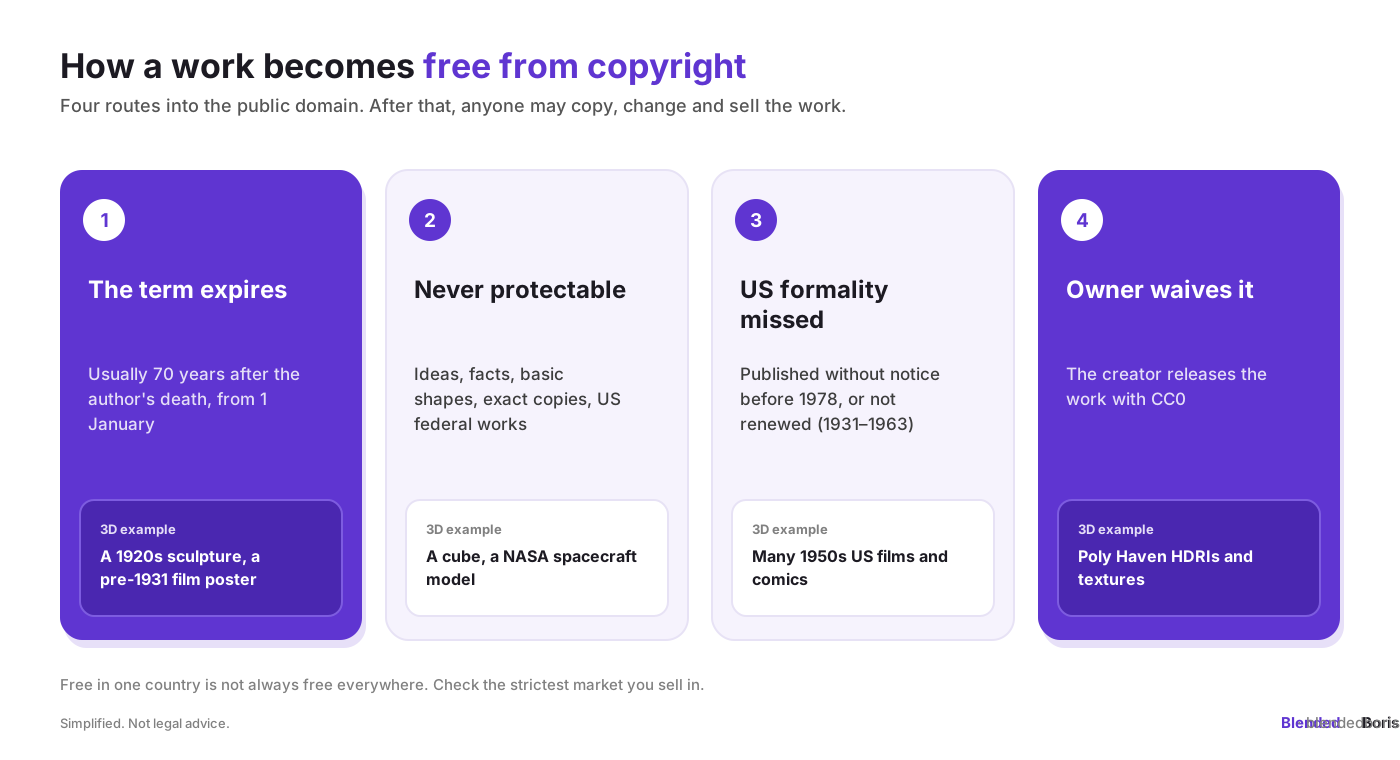
- The term expires. Copyright lasts for a fixed time, then ends for good. In the EU, the UK and the US (for works made since 1978) that is usually the author's life plus 70 years. On 1 January after the last year, the work is free.
- It was never protectable. Ideas, facts, basic shapes, exact copies of real objects, US federal government works and purely AI-generated output have no copyright to begin with. The no copyright guide lists these categories with 3D examples.
- A US formality was missed. Before 1978, US works lost protection if they were published without a copyright notice, and works published from 1931 to 1963 needed a renewal after 28 years. Many were never renewed, so they became free early. Foreign works are an exception: many had their US copyright restored in 1996.
- The owner waived it. A creator can give the work away with CC0. This is how most free 3D asset libraries work.
Free in one country does not mean free everywhere. A 1950s US film that was never renewed can be public domain in the US and still protected in Europe, where the term runs from the death of the director, writers and composer. If you sell worldwide, check the strictest market. The copyright duration and renewal guide, international copyright protection and international copyright protection for Blender artists explain the cross-border rules.
How long until a work is free from copyright?
Worked example. You model and publish a character in 2026 and die in 2070. In the EU, the UK and the US, the character becomes free from copyright on 1 January 2141. If a studio owns it as a work made for hire in the US, it becomes free on 1 January 2122, 95 years after publication. Until then, the rights pass to your heirs, so it is worth keeping clear records of what you made: see copyright notice examples and how to register copyright.
What becomes free from copyright on 1 January 2027
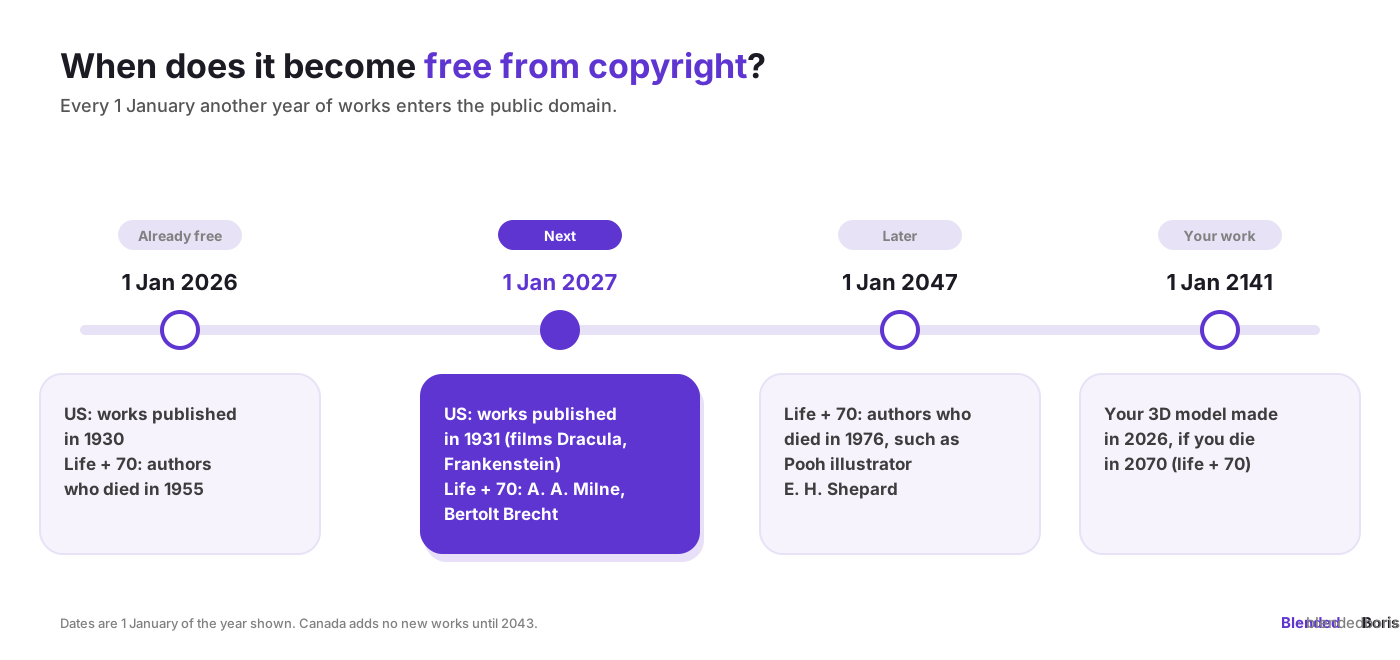
Two warnings for 3D artists. First, only the original version becomes free: Universal's 1931 Frankenstein film enters the US public domain, but the later make-up designs and the studio's trademarks do not, so modelling "Universal's Frankenstein" for sale is still risky. Second, illustrations often have a different author: Milne's Pooh text becomes free in Europe in 2027, but E. H. Shepard's drawings stay protected there until 2047, because he died in 1976. Check each part of a work separately, and read copyright vs trademark vs patent before you build on famous characters. The Public Domain Day list from Duke Law is a good yearly overview for the US.
Where to find 3D assets free from copyright
These libraries release their assets into the public domain with CC0, so you can use, change and sell them in your projects without credit. Always check the licence on the individual asset page, because some sites mix licences.
Poly Haven's terms are short and clear, and worth reading once as a model of what a real CC0 licence looks like: see Poly Haven's licence page. Blender-specific tips on these libraries are in free texture resources for Blender, HDRI lighting in Blender and Blender asset packs and resources.
Images, art and music free from copyright
Old artworks are public domain, but a photo of one can be a new work in some countries. In the EU, faithful reproductions of public domain visual art cannot be protected (Article 14 of Directive 2019/790), which is why museum images are such a good source of free textures and reference.
Free to download, but not free from copyright
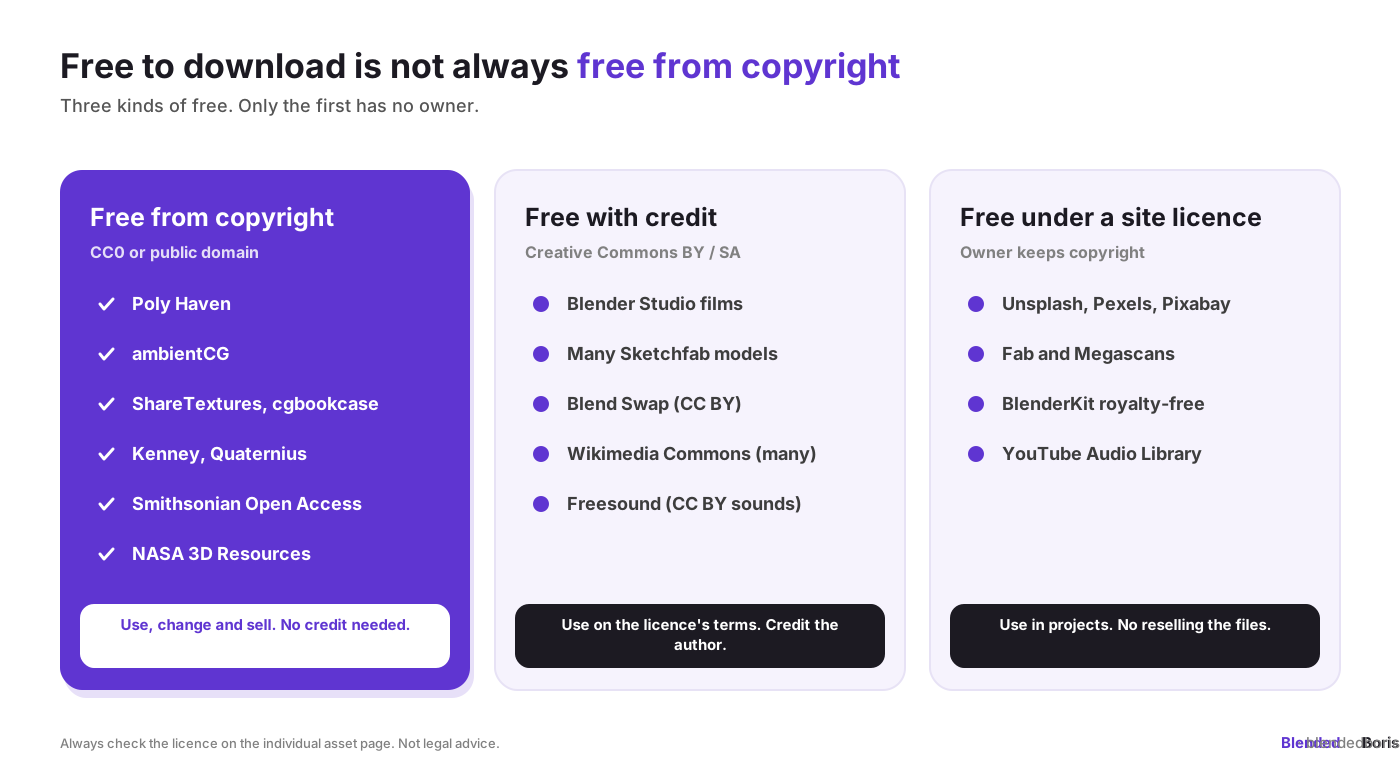
None of this makes these sites a bad choice. It just means the creator still owns the work, and your use has to fit the licence. The practical difference shows up when you sell: a CC0 texture can be packed into your paid asset pack, a royalty-free or site-licensed one usually cannot. Before you upload, read Blender marketplace copyright policies, marketplace copyright policies and the BlenderKit add-on guide.
How to use free-from-copyright assets in Blender safely
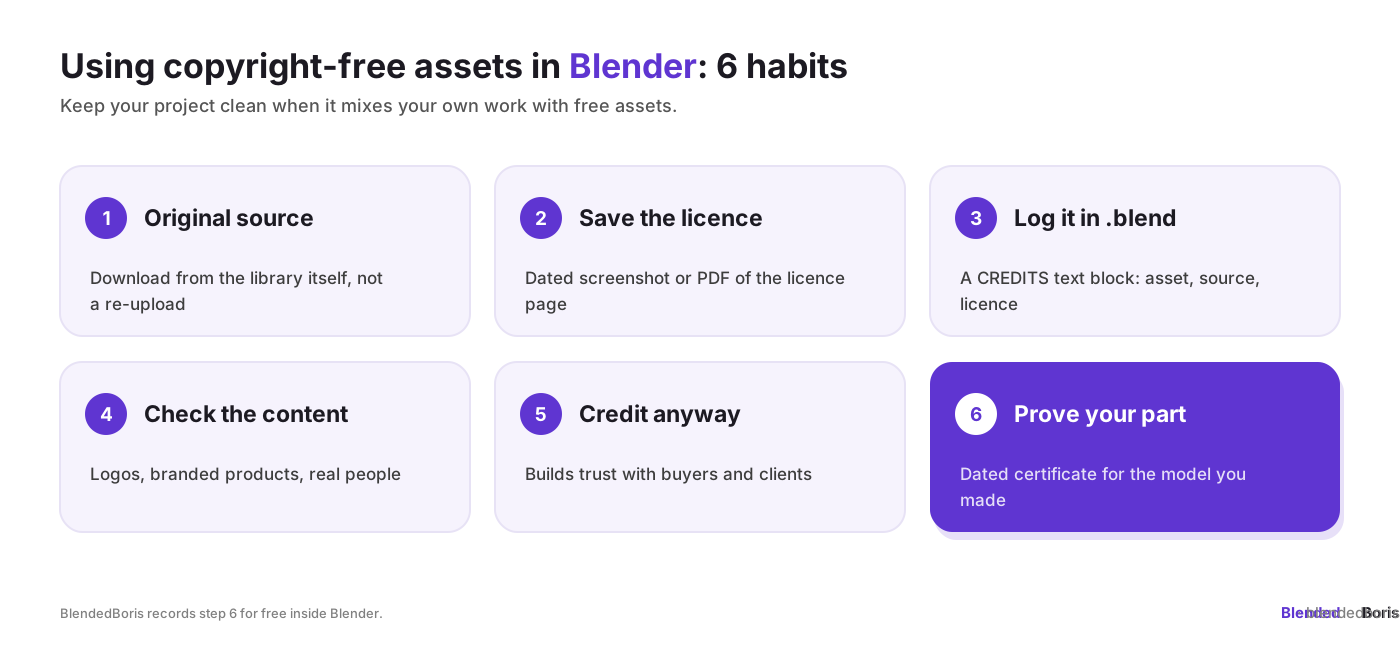
- Download from the original source. Re-uploads on other sites often carry the wrong licence.
- Save the licence. Keep a dated screenshot or PDF of the licence page with the file. Sites change their terms; your record shows what applied when you downloaded.
- Log it in the .blend. Add a Text block named CREDITS that lists every third-party asset, its source and its licence.
- Check what is in the asset. A CC0 scan can still show a logo, a branded product or a real person, and those bring trademark and personality rights.
- Credit anyway. CC0 does not require credit, but naming your sources builds trust with buyers and clients. Example 20 in our copyright examples shows the wording.
- Protect your own part. Your model, your textures and your scene composition are new work and protected by copyright. Keep dated proof that they are yours.
If you sell models that include free assets, list them on the product page. Marketplaces handle mixed-source products differently, and some reject public domain content that anyone can download for free. See how to sell Blender 3D models online, the guide to selling 3D models online and selling STL files on marketplaces.
Can you sell and copyright work based on public domain material?
Yes, with one limit. You can sell anything made from public domain material, and you own the copyright in what you add: your modelling, retopology, textures, lighting and composition. You do not get any rights in the public domain part itself, so others can still use the same source. That is how Disney could build on Grimm fairy tales, and how anyone could use the 1928 Steamboat Willie Mickey after it entered the US public domain in 2024, while later Mickey designs and Disney's trademarks stay protected.
For a 3D artist, this means a model of a public domain statue is yours only if you made real creative choices. An exact scan or a faithful copy may not be protected at all, as courts held for faithful digital car models in Meshwerks v. Toyota. Read do 3D models automatically have copyright protection? for where that line sits, and fair use guidelines for digital artists and fair use in digital art for using material that is still protected.
Can you make your own work free from copyright?
Yes, by releasing it under CC0. Many artists do this for base meshes, practice scenes or teaching files, and it is how the libraries above exist. It cannot be undone for copies people already have, so release only what you are happy to see in other people's paid products and AI training sets. The options are compared in what no copyright means and copyright vs Creative Commons licensing.
Mix free assets with your own work, and prove which part is yours. BlendedBoris is a free plugin for Blender that records your 3D model on the blockchain and gives you a lifetime ownership certificate. It creates a digital fingerprint that links the model to you, so when your scene combines CC0 textures with your own modelling, you have dated proof of authorship for every version you made.
👉 Get the free BlendedBoris plugin
Free from copyright in numbers (2026)
Conclusion
Free from copyright means public domain: no owner, no permission, no limits on selling or remixing. Works get there when the term expires, when they were never protectable, when a US formality was missed, or when the owner waives the rights with CC0. For 3D artists, the best sources are CC0 libraries and museum open access collections; most other "free" sites are licensed, which is fine as long as you follow the licence. Download from the original source, save the licence, log every asset in your .blend, and keep dated proof of the part that is yours.
This is general information, not legal advice. Terms and exceptions differ by country; check with a lawyer before relying on a work's status for a commercial project.
This is general information, not legal advice. Terms and exceptions differ by country; check with a lawyer before relying on a work's status for a commercial project.
FAQ: free from copyright
What does free from copyright mean?
That nobody owns the copyright in a work, so anyone can copy, change and sell it without permission. It is the same as public domain.
Is copyright-free the same as royalty-free?
No. Royalty-free means you do not pay per use, but the creator keeps the copyright and the licence sets the rules. Copyright-free means there is no owner at all.
When does a work become free from copyright?
When its term ends, usually 70 years after the author's death, on 1 January of the next year. In the US, works published before 1931 are already free, and 1931 works become free on 1 January 2027.
Are Unsplash, Pexels and Pixabay images free from copyright?
No. They are free to use under each site's own licence, and the photographers keep the copyright. You cannot, for example, sell unaltered copies.
Where can I find 3D models free from copyright?
CC0 libraries such as Poly Haven, ambientCG, Kenney and Quaternius, the CC0 items in Smithsonian Open Access, NASA's 3D resources, and assets filtered for CC0 on Sketchfab and OpenGameArt.
Can I sell a 3D model made from public domain material?
Yes. You own the copyright in your own creative additions, but not in the public domain source, which others can still use.
Is Winnie-the-Pooh free from copyright?
The original 1926 book is already public domain in the US. In life + 70 countries, A. A. Milne's text becomes free on 1 January 2027, but E. H. Shepard's illustrations stay protected until 2047, and Disney's versions and trademarks remain protected.
Do I have to credit CC0 assets?
No, CC0 does not require credit. Crediting them is still good practice and helps buyers trust your work.
Is music free from copyright on YouTube?
Only truly public domain recordings are. Most "copyright-free" music on YouTube is licensed, and YouTube's Audio Library tracks are licensed for use in YouTube videos.
How can I make my own model free from copyright?
Release it under CC0. It cannot be undone for people who already have copies, so use it only for work you are happy for anyone to reuse.


