
TL;DR: what "no copyright" means
A work has no copyright only if its protection has expired, it was never protectable, or its owner gave the rights up. That covers the public domain (in the US, everything published before 1931), US federal government works, ideas, facts, names and basic shapes, purely AI-generated output, and works the owner released under CC0.
Most things sold or shared as "no copyright" are something else: royalty-free or Creative Commons material that is still protected and comes with a licence. And writing "no copyright intended" under a video has no legal effect at all. This guide explains each meaning, shows 3D and Blender examples, and gives you a five-step check before you use anything labelled "no copyright" in your work.
Key takeaways
- Copyright is automatic. Without a clear sign that a work is free, assume it is protected, even if it has no © symbol.
- "No copyright" is a status, not a label anyone can stick on. The labels that matter are CC0 (the owner waived the rights) and the Public Domain Mark (someone states the work is already free).
- Royalty-free is not copyright-free. You pay once, but the owner keeps the copyright and the licence terms still apply.
- Even a work with no copyright can be restricted by trademarks, design rights, contracts or platform terms. A public domain car body is still a brand. How to register a design explains how those design rights work and how to get your own.
- Your own Blender models are never "no copyright" by accident. They are protected from the moment you save them, unless you choose to give the rights away.
What does "no copyright" mean?
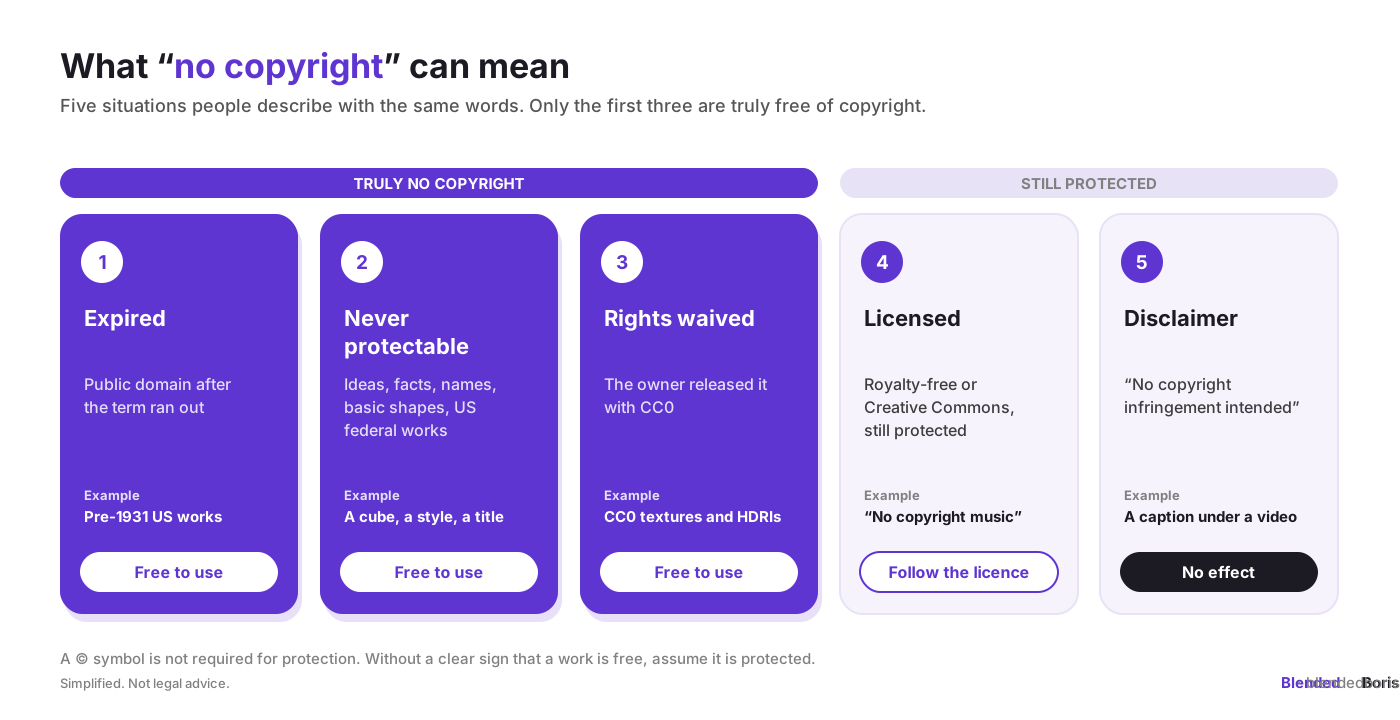
"No copyright" is not a legal category. People use the phrase for at least five different situations, and only the first three mean that you can use a work without asking anyone. If you are new to how protection starts, read copyright basics for 3D artists first.
What has no copyright?
Copyright protects original creative expression for a limited time. Everything outside that box has no copyright. For a 3D artist, the useful question is which parts of a project fall outside it.
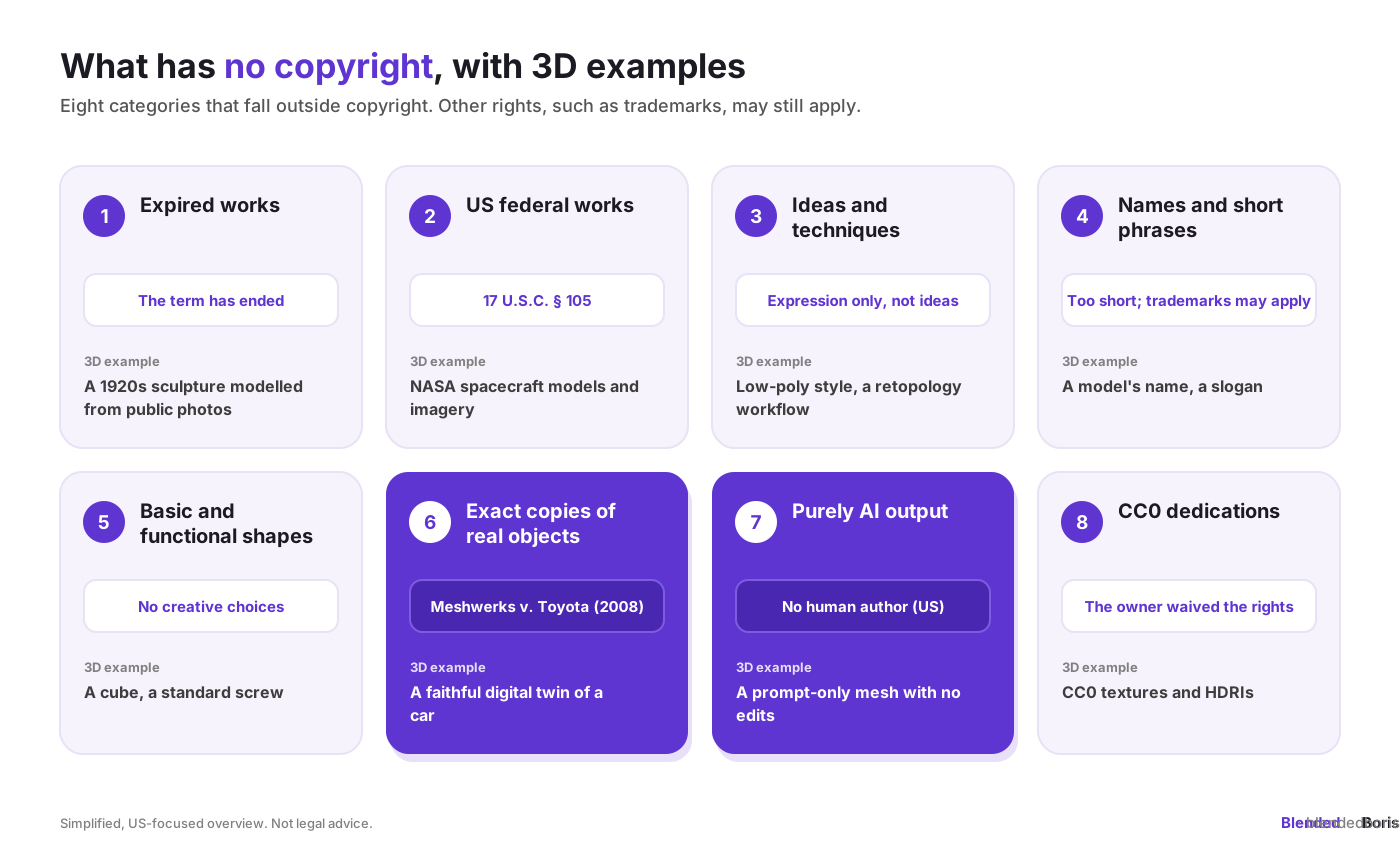
Two warnings. First, "no copyright" in one part of a file does not free the rest: a CC0 texture on your original character leaves the character fully protected. Second, the line between a faithful copy and an original model is not always clear, and do 3D models automatically have copyright protection? explains where courts draw it. For AI-assisted work, see AI-generated art and copyright in 2026 and can AI-generated art be copyrighted?.
No copyright because it expired: the public domain in 2026
Every 1 January a new year of works loses its copyright. On 1 January 2026, works published in 1930 entered the US public domain, together with sound recordings from 1925. That includes the first Betty Boop cartoons, Disney's Pluto in his first appearance, the first four Nancy Drew books and songs such as "I Got Rhythm" and "Georgia on My Mind". Only those original versions are free: later designs of the same characters, and the trademarks built on them, can still be protected. See free from copyright for what becomes free on 1 January 2027 and where to find CC0 assets.
Terms differ by country, and a work can be free in the US and still protected in Europe, or the other way round. Foreign works are a common exception to the US renewal and notice rules: many had their US copyright restored in 1996. If you sell worldwide, check the strictest market you sell in. The copyright duration and renewal guide explains how long protection lasts, and international copyright protection for Blender artists covers cross-border rules.
"No copyright" labels: CC0, the Public Domain Mark and NoC statements
Museums, libraries and asset sites use standard labels to say a work is free. They look similar but mean different things, and the difference matters if someone challenges your use.
CC0 is the only one of these where the owner gives up rights, so it is the label you want for assets you build on. A Public Domain Mark is useful information, but it is someone's opinion about a work's status, not a promise. The official texts are at the CC0 1.0 deed and rightsstatements.org. For how CC0 compares with the other Creative Commons licences, see Creative Commons vs copyright for Blender assets and copyright vs Creative Commons licensing.
No copyright vs royalty-free vs Creative Commons
Search for "no copyright music", "no copyright images" or "no copyright 3D models" and most results are not free of copyright at all. They are licensed. That is fine, as long as you know which licence you are under.
Video platforms add another layer. YouTube describes the music in its own Audio Library as safe to use in YouTube videos, which is a licence for that platform, not the end of copyright. Tracks from third-party "no copyright music" channels can still trigger Content ID claims, because the system matches audio, not licences. Marketplaces have their own rules too: read Blender marketplace copyright policies and marketplace copyright policies before you upload anything that includes third-party assets.
Does "no copyright intended" protect you?
No. "No copyright infringement intended", "I don't own this" and "all credit to the creator" have no legal effect. Infringement does not depend on intent: if you copy protected work without permission and no defence such as fair use applies, it is infringement, whatever the caption says. A disclaimer can even work against you, because it shows you knew the material belonged to someone else.
What actually makes a use lawful is one of three things: the work has no copyright, you have permission (a licence), or a legal exception covers your use. In the US the main exception is fair use, explained in fair use guidelines for digital artists and fair use in digital art. If you are on the receiving end and someone copies your model with a "no copyright intended" note, the disclaimer changes nothing: use the DMCA takedown guide for artists.
Common no copyright myths
No copyright doesn't mean no rules: traps for 3D artists
A work with no copyright can still be off-limits for other reasons. These are the ones that catch 3D artists most often.
If a project mixes several of these, map them before you publish. Copyright vs trademark vs patent for digital artists and intellectual property rights: what each right lets you stop explain what each right covers. For printable products, see designing functional 3D printed objects.
How to check if a work really has no copyright
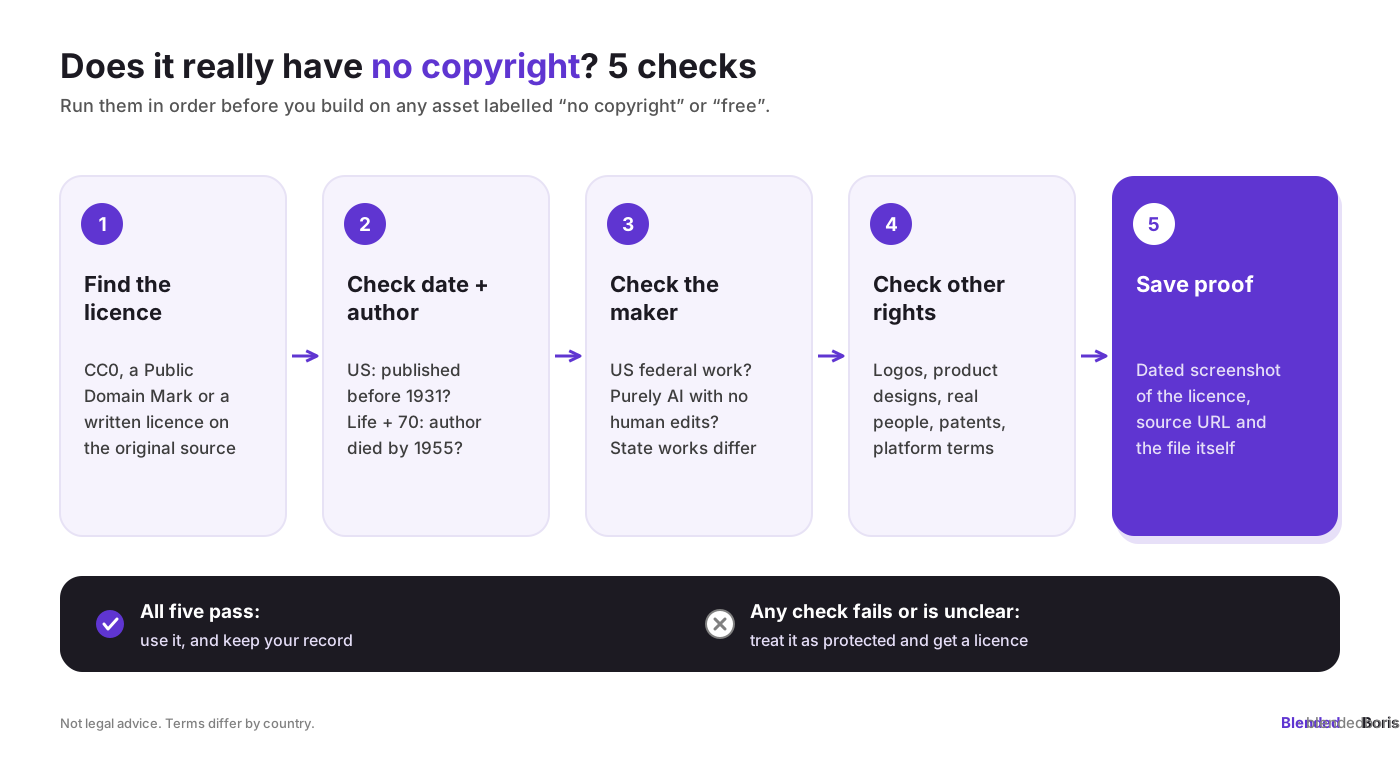
- Find the licence or label. Look for CC0, a Public Domain Mark or a written licence on the original source, not on a re-upload. If you cannot find one, assume the work is protected.
- Check the date and the author. Was it published in the US before 1931? Did the author die in 1955 or earlier (for life + 70 countries)? Was a US work from 1931–1963 renewed? The US Copyright Office's public records system has online records from 1978 onward; older records are in its Virtual Card Catalog.
- Check who made it. US federal works have no copyright, but state and foreign government works often do. Purely AI-generated material has none in the US, but you need to know that no human edited it.
- Check the other rights. Logos, brand shapes, product designs, real people and patented mechanisms can be protected even when copyright is not.
- Save proof. Keep a dated screenshot of the licence page, the source URL and the file you downloaded. If the page changes later, your record shows what the terms were when you used it.
Reverse image search helps you find the original source of a texture or render. For 3D assets, prefer libraries that state the licence on every file. Our free texture resources for Blender, Blender asset packs and resources and BlenderKit add-on guides show where licences are listed.
Can your own 3D work have no copyright?
Only if you decide it should. Your models, sculpts, textures and renders are protected from the moment you create them, with or without a notice, and making them in Blender does not change that: the GPL covers the software, not your output, as is Blender really free? explains. You have three options:
A CC0 dedication cannot be taken back for copies people already have, so use it only for work you are happy to see anywhere, including in commercial products and AI training sets. For ready-made wording for each option, use our copyright notice examples and copyright templates for Blender assets. If you keep your rights and plan to enforce them in the US, register the copyright for your most valuable work.
Whatever you choose, keep proof that you made the work first. When a model of yours appears somewhere labelled "no copyright", dated evidence of creation is what lets you prove it was yours. The copyright best practices for Blender artists and community guidelines for sharing Blender work show how to publish without losing control.
Prove it's yours before someone calls it "no copyright". BlendedBoris is a free plugin for Blender that records your 3D model on the blockchain and gives you a lifetime ownership certificate. It creates a digital fingerprint that links the model to you, so you have dated proof of authorship for every version, ready to attach to a takedown notice when your work turns up on a "free" or "no copyright" site.
👉 Get the free BlendedBoris plugin
No copyright in numbers (2026)
Conclusion
"No copyright" is one of the most misused phrases online. A work truly has no copyright only when its term has run out, it was never protectable, or its owner waived the rights, and even then trademarks, design rights and platform terms can still apply. Everything else labelled "no copyright" is licensed, and the licence decides what you may do. Before you use an asset, run the five checks and save proof of the licence. For your own models, remember that they are protected from the first save, and keep dated proof so nobody can pass them off as free.
This is general information, not legal advice. Copyright terms and exceptions differ by country; check with a lawyer before relying on a work's status for a commercial project.
This is general information, not legal advice. Copyright terms and exceptions differ by country; check with a lawyer before relying on a work's status for a commercial project.
FAQ: no copyright
What does no copyright mean?
That nobody owns the copyright in a work, because it has expired, was never protectable or was waived by the owner, for example with CC0. Anyone can then copy, change and sell the work without permission.
Is "no copyright" the same as public domain?
Usually. Works with no copyright are in the public domain. But many sites use "no copyright" loosely for royalty-free or Creative Commons material, which is still protected.
Does "no copyright infringement intended" work?
No. It has no legal effect. Infringement does not depend on intent, so you still need permission, a work with no copyright, or a defence such as fair use.
Can I use no copyright music in my videos?
Truly public domain recordings, yes. Most "no copyright music" is royalty-free and licensed, so follow the licence and expect Content ID claims if the track is registered there.
Is royalty-free the same as copyright-free?
No. Royalty-free means you do not pay per use. The creator keeps the copyright and the licence sets the rules.
Does a work without a © symbol have no copyright?
No. A notice is optional in the US for works published since 1989 and in almost every other country. Protection is automatic.
Are 3D models with a CC0 licence safe to sell in my products?
Yes, CC0 allows commercial use and modification. Still check for trademarks, product designs and real people in the model, and keep a record of the licence.
What works have no copyright in 2026?
In the US: works published before 1931, sound recordings published before 1926, many 1931–1963 works that were never renewed, and federal government works. In life + 70 countries: works by authors who died in 1955 or earlier.
Does AI-generated art have copyright?
Purely AI-generated output has no copyright in the US. Work with meaningful human contribution can be protected for the human parts.
Can I make my own work no copyright?
Yes, by releasing it under CC0. It cannot be undone for people who already have copies, so use it only for work you are happy for anyone to reuse.


