
TL;DR: copyright issues
A copyright issue is any question or dispute about who owns a creative work and who may copy, change or sell it. For 3D artists the most common ones are: someone reposts or resells your model, you use a texture, brand or character you had no right to use, a client and you disagree about who owns the files, a licence is misread, and, since 2023, AI companies training on models you published.
Most copyright issues are settled without a court: with proof, a clear message, a platform takedown or a cease and desist letter. This guide lists the 12 issues Blender artists run into most, what the law says about each, what changed in 2026, and the steps to prevent and solve them.
Key takeaways
- Copyright issues come from two sides: someone copies your work, or you use someone else's. Both are avoidable with the same habits.
- Ownership causes more disputes than theft. In the US, a freelancer keeps the copyright unless a signed written agreement transfers it.
- Proof decides most disputes. Dated files, metadata and a certificate of creation make a takedown fast; without them it is your word against theirs.
- In 2026, AI is the fastest-growing issue: a 3D artist sued Meta, Nvidia, Microsoft and Roblox over models taken from Sketchfab, and US law still gives no copyright to purely AI-generated output.
- Escalate in steps: message, takedown, cease and desist, small claims, court. In the US you need a registration before you can sue.
What are copyright issues?
Copyright gives the author of an original work, such as a 3D model, a texture, a render or an animation, the exclusive right to copy it, adapt it, distribute it and show it in public. A copyright issue arises whenever those rights are unclear or ignored: when nobody knows who owns a file, when a use goes beyond a licence, or when work is copied without permission. The protection itself is automatic, as copyright basics for 3D artists explains, so the question is rarely whether a work is protected and usually who may do what with it.
The rest of this guide goes through these types with the 12 situations that come up most. For the complete legal picture, see the complete guide to digital art copyright protection.
Copyright issues when someone copies your work
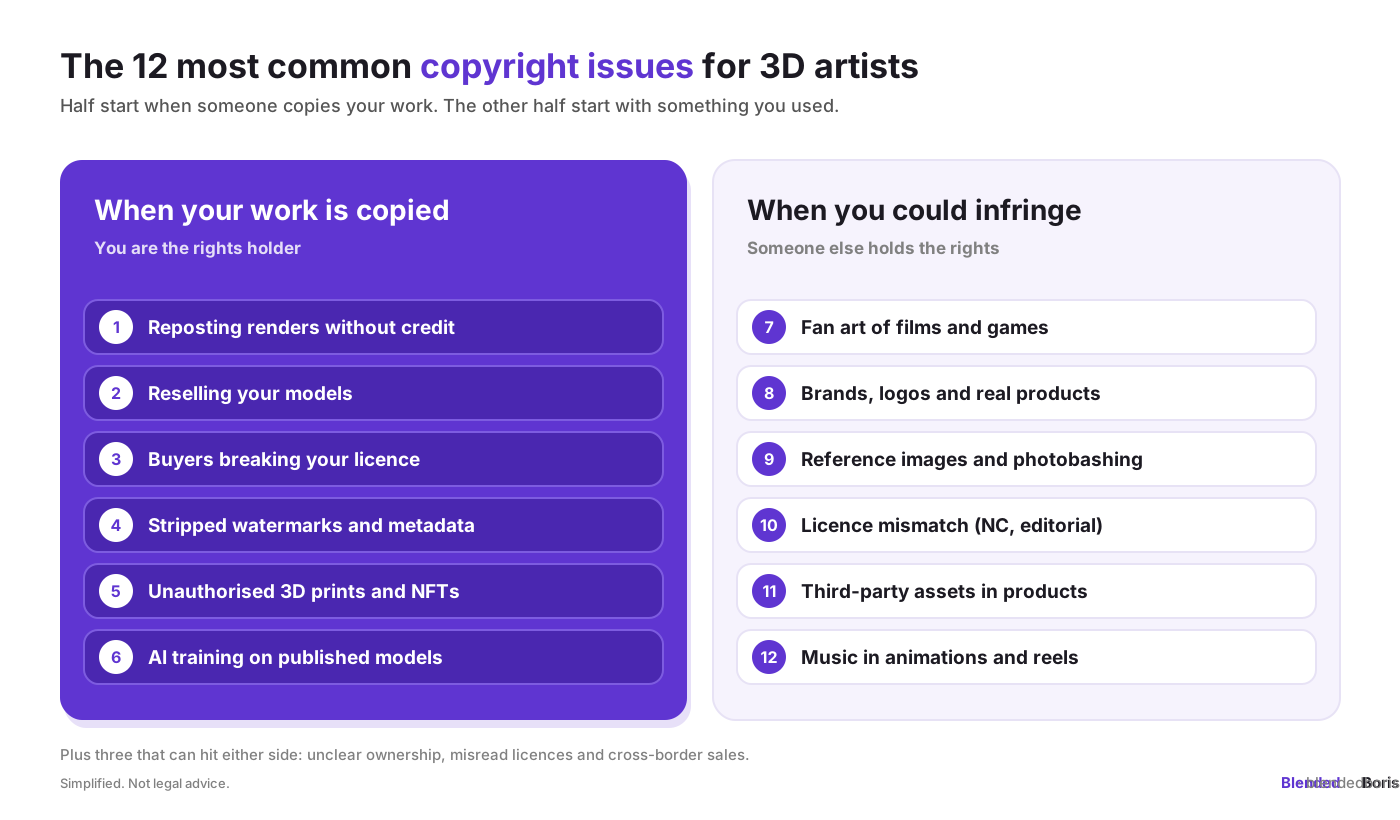
These are the issues artists ask about most, because they are the visible ones: you find your model, render or animation somewhere it should not be.
- Reposting without credit. A render or turntable shared on social media, a forum or a Pinterest board. Usually a takedown request to the platform is enough.
- Reselling your models. Your free or paid model is uploaded to another marketplace under someone else's name. This is copying and distribution without a licence; marketplaces remove listings on a valid notice. See how to protect Blender models from theft.
- Licence abuse by buyers. A customer puts your source files in their own asset pack or shares them in a Discord server. Whether that is infringement depends on your licence text, so write it clearly: copyright notice and licence examples has wording you can copy.
- Stripped watermarks and metadata. Someone crops your mark or removes the copyright line from the file. In the US, removing copyright management information can be a separate violation worth $2,500 to $25,000 per violation, on top of any infringement.
- Unauthorised 3D prints and NFTs. Your character printed and sold on Etsy, or your render minted as an NFT. Printing and minting are copying; the person who did it does not own your copyright. See NFTs and blockchain ownership for 3D artists.
- AI training and look-alike output. Your public models or renders collected into a dataset, or a generator producing close copies of your style or work. This is the most unsettled area in 2026 and has its own section below.
In every one of these cases, the first thing you need is proof that the work is yours and that it existed first. Dated project files, version history and an independent certificate make the difference between a takedown that works in a day and a dispute that drags on. Metadata and watermarking for Blender and protecting Blender models from theft show how to prepare before anything happens.
Copyright issues you can cause yourself
The other side matters just as much: a takedown, a lost marketplace account or a claim against your client usually starts with one asset you did not have the right to use.
Not every use needs permission. Commentary, criticism, teaching and parody can be fair use in the US, and the EU has similar but narrower exceptions; see fair use guidelines for digital artists and fair use in digital art. For assets you can use without any of these worries, see free from copyright and what no copyright means. When trademarks, not copyright, are the problem, copyright vs trademark vs patent explains the difference.
Ownership issues: clients, employers and collaborators
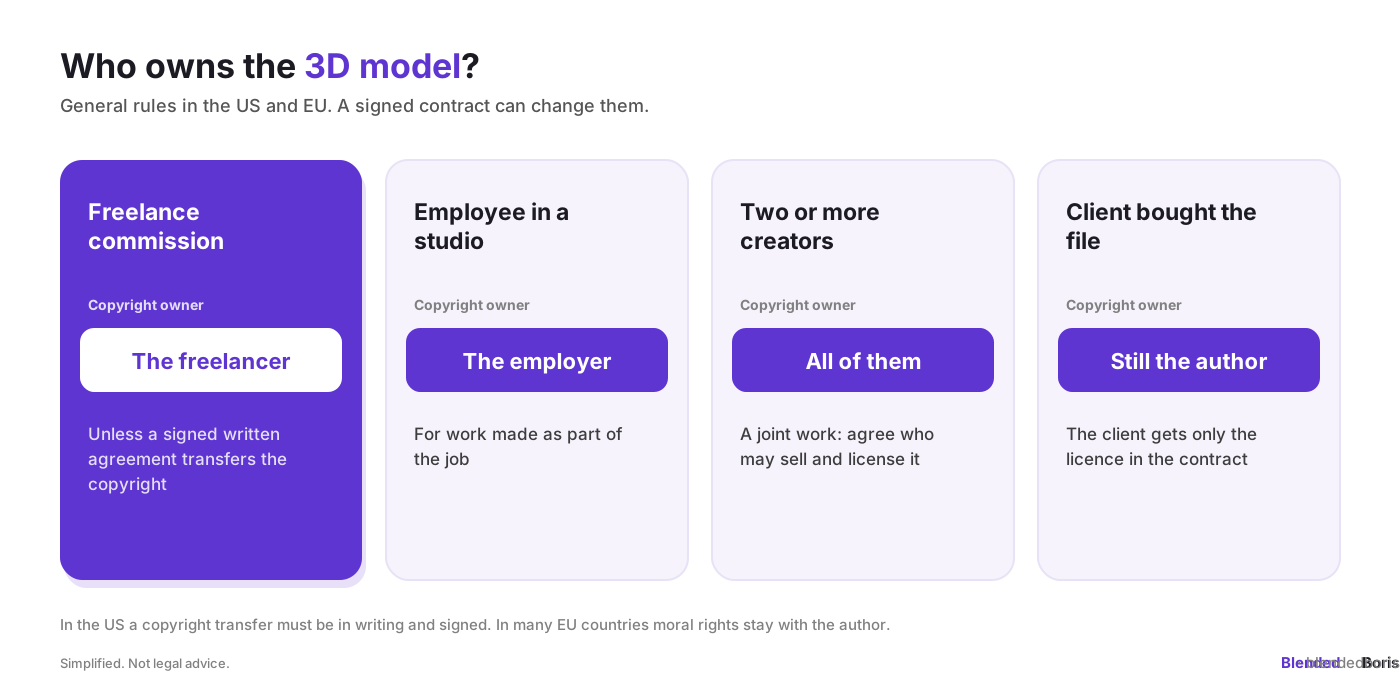
Moral rights add a European twist: in many EU countries you keep the right to be named as the author and to object to distortion of your work even after you sell the copyright, and in some countries you cannot waive them. Settle ownership before work starts, not when the client asks for the .blend file. Building a successful Blender freelance career and client acquisition tips for Blender artists cover contracts with clients.
AI copyright issues in 2026
AI raises copyright issues in both directions: whether AI companies may train on your work, and whether you own what an AI tool makes for you. Court cases are still being decided, so treat the table below as the state of play in October 2026, not the final answer. For every ruling so far and the older cases behind them, see landmark copyright cases from 1884 to 2026.
The Beaulier rulings are worth reading if you publish models on Sketchfab or similar sites: a summary of Beaulier v. Meta explains why intent and "distribution" decided the first round. For practical protection, see protecting your work against AI copyright issues, how to opt out of AI training datasets and AI art copyright disputes. On owning AI-assisted work, read AI-generated art and copyright in 2026.
International copyright issues
Copyright is territorial: each country applies its own law to infringements on its territory. Thanks to the Berne Convention your model is protected automatically in more than 180 countries, but the details differ: fair use exists in the US and not in the EU, terms of protection differ, and enforcement against a seller in another country is slower. Platform takedowns work across borders, which is why they are usually the first step. See international copyright protection for Blender artists and international copyright protection.
How to resolve a copyright issue, step by step
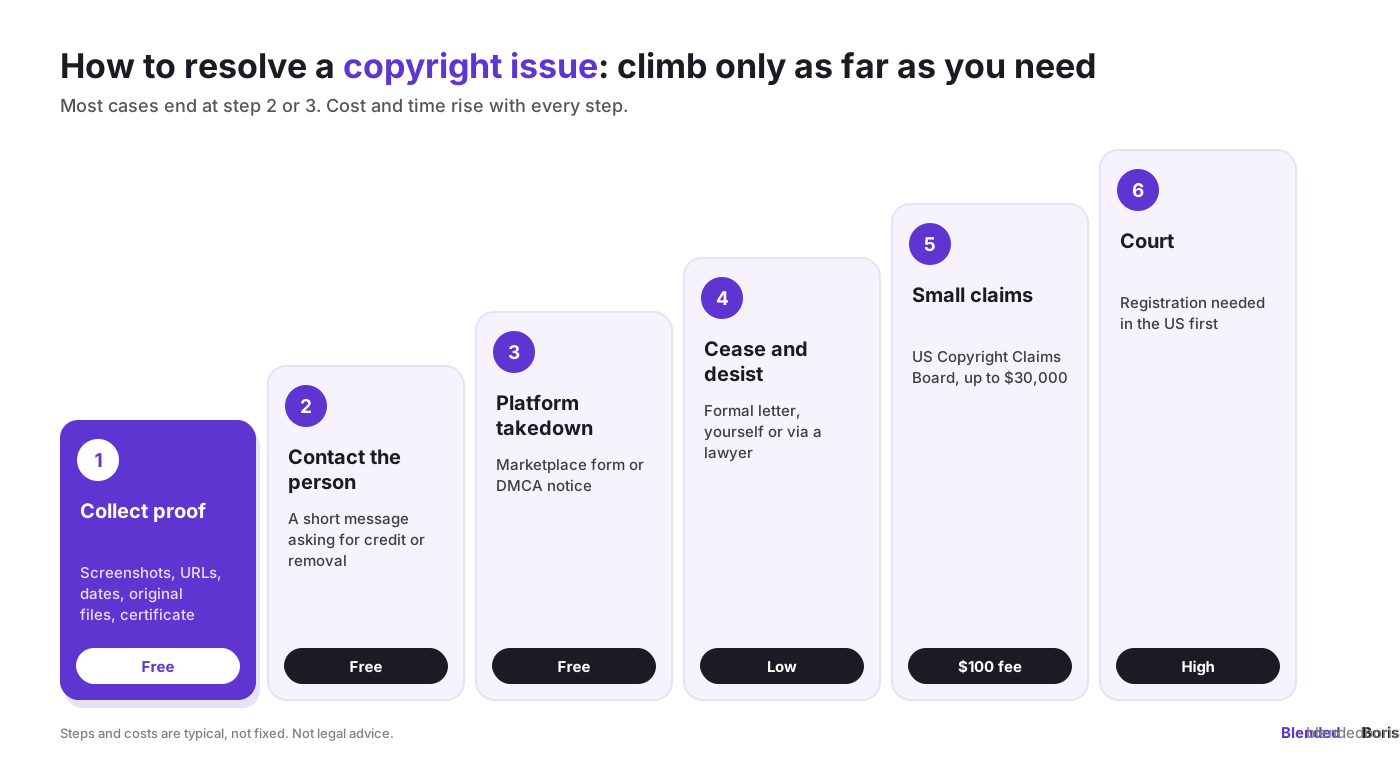
- Collect proof. Screenshots with URLs and dates, your original files, version history and any certificate of creation. Do this before the copy disappears.
- Contact the person. Many reposts are careless, not malicious. A short, polite message asking for credit or removal solves a surprising share of cases.
- Send a platform takedown. Marketplaces, social networks and hosts have copyright forms; in the US the DMCA process requires the platform to act quickly on a valid notice. If the uploader files a counter-notice, the content can return after 10 to 14 business days unless you sue. Follow the DMCA takedown guide for artists or DMCA takedown procedures.
- Send a cease and desist letter. For a seller who ignores takedowns or works off-platform. Use how to write a cease and desist letter and cease and desist letters for art theft.
- Use a small claims option. In the US, the Copyright Claims Board handles claims up to $30,000 for a $100 filing fee, without a lawyer, if the other side does not opt out within 60 days. You need a registration or a pending application.
- Go to court. For serious or repeated infringement. In the US you need a registration before suing over a US work, and statutory damages and legal fees are only available if you registered in time. See how to register copyright, legal remedies for digital art infringement and when to hire an IP attorney.
Costs climb fast at the top of the ladder, which is why prevention and early steps matter. Copyright litigation costs and copyright infringement remedies explain what each step can cost and win.
How to prevent copyright issues: a checklist for 3D artists
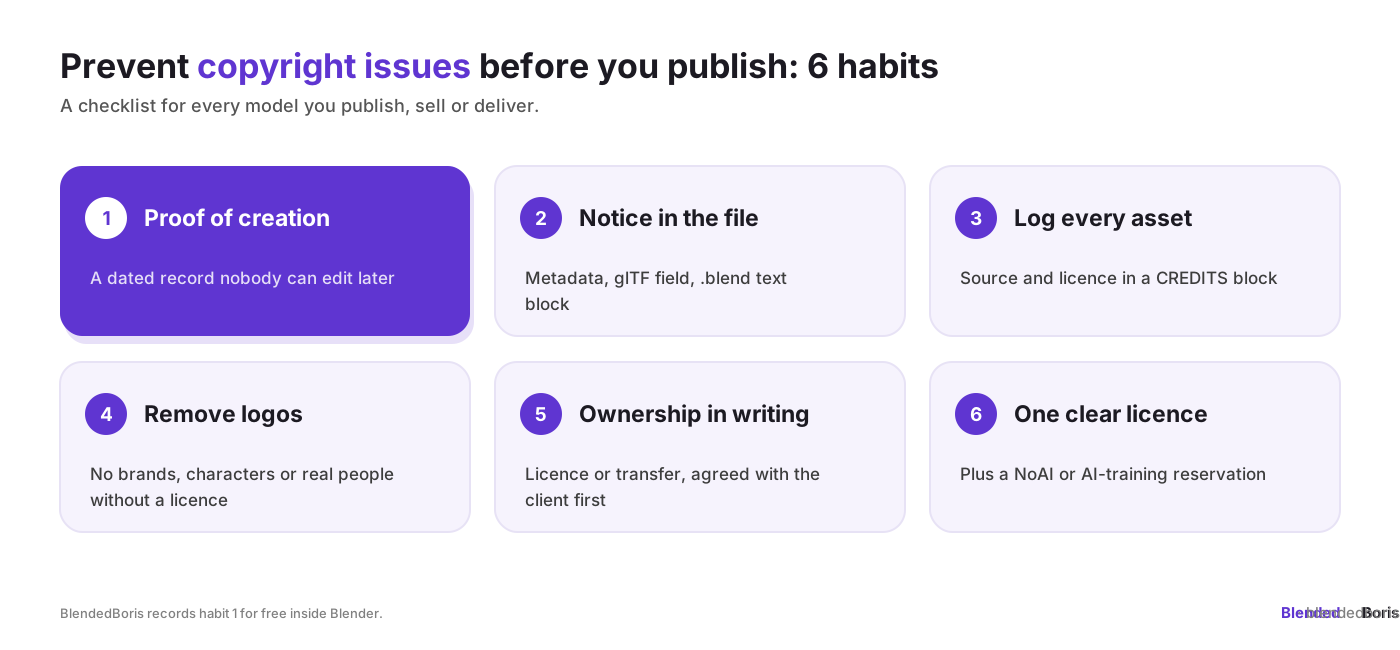
- Record proof of creation for every model you publish or deliver, with a date nobody can edit later.
- Put a notice inside the file and in image metadata, not only on the web page.
- Log every third-party asset with its source and licence in a CREDITS text block in the .blend.
- Check for logos, characters and real people before a model goes on sale.
- Agree ownership in writing with every client and collaborator before work starts.
- Choose one clear licence for downloads, and use the NoAI or AI-training reservation where you want it. See Creative Commons vs copyright for Blender assets.
Marketplaces add their own rules and takedown processes on top of the law: read Blender marketplace copyright policies before you list. For the full routine, see must-know copyright tips for digital artists and copyright best practices for Blender artists.
Most copyright issues are won or lost on proof. BlendedBoris is a free plugin for Blender that records your 3D model on the blockchain and gives you a lifetime ownership certificate. It creates a digital fingerprint that links the model to you, so when your work is reposted, resold or claimed by someone else, you can show a dated record of every version you made and attach it to a takedown or cease and desist letter.
👉 Get the free BlendedBoris plugin
Copyright issues in numbers (2026)
Conclusion
Copyright issues for 3D artists fall into a few clear groups: your work copied, you using what is not yours, unclear ownership, misread licences and, increasingly, AI. The same habits prevent almost all of them: keep dated proof that you made your work, put notices and licences inside your files, log every asset you did not make, and agree ownership in writing. When an issue does happen, climb the ladder one step at a time; most cases end with a message or a takedown, and the ones that do not are much stronger when you registered early and can prove the date of creation.
This is general information, not legal advice. Copyright law differs by country; for a real dispute, talk to an IP lawyer.
This is general information, not legal advice. Copyright law differs by country; for a real dispute, talk to an IP lawyer.
FAQ: copyright issues
What are copyright issues?
Questions or disputes about who owns a creative work and who may copy, change, distribute or show it. They include infringement, ownership disputes, licence misuse and, more and more, AI training and AI output.
What are the most common copyright issues for digital artists?
Reposting without credit, resale of models on other marketplaces, stripped watermarks, fan art and brand use, licence mismatches, unclear ownership with clients and AI training on published work.
What should I do if someone steals my 3D model?
Collect proof, contact the person or the platform, and send a takedown notice. If that fails, send a cease and desist letter, and consider small claims or a lawsuit for serious cases.
Do I own a model I made for a client?
In the US, a freelancer keeps the copyright unless a signed written agreement transfers it. The client gets the licence the contract grants. Put it in writing before you start.
Is fan art a copyright issue?
Usually yes. A model of a protected character is a derivative work, and selling it without a licence is risky, even if you modelled everything yourself.
Can I use images from Google as textures?
Not without checking the licence. Most images online are protected. Use your own photos, CC0 libraries or textures whose licence allows your use.
Can AI companies train on my 3D models?
It is not settled. US courts are still deciding whether training is fair use. In the EU you can opt out of commercial text and data mining, and platforms such as Sketchfab offer a NoAI tag.
Who owns AI-generated 3D models?
In the US, purely AI-generated output has no copyright. The parts you create or meaningfully change yourself can be protected.
Do I need to register copyright to solve a copyright issue?
Not for takedowns or letters. In the US you need a registration to sue over a US work, and early registration unlocks statutory damages and legal fees.
How much does a copyright dispute cost?
A takedown costs nothing. A US Copyright Claims Board claim costs $100 to file. A federal lawsuit can cost tens or hundreds of thousands of dollars, which is why most disputes settle early.


