
TL;DR: how to register a design
To register a design, you file pictures of how your product looks with a design office, pay a fee and get an exclusive right to that appearance for up to 25 years. In the EU you file one application at the EUIPO from €350, in the UK at the Intellectual Property Office from £60, and in the US you apply for a design patent at the USPTO, which costs $520 to $2,600 in official fees. One Hague application through WIPO can cover about 100 countries.
For 3D artists, 2026 changed a lot: the EUIPO now accepts OBJ and STL files and MP4 animations as design views, EU design rights now cover creating and sharing 3D printing files, and you can register virtual products and interfaces. File within 12 months of first showing your design: after that, your own post blocks registration in the EU, UK and US, and many countries give you less time.
Key takeaways
- A design protects appearance, not function: the shape, lines, colours, texture and ornament of a product, physical or digital.
- Registration is territorial. Register in the EU, the UK, the US or through the Hague system, wherever you sell or where copies are made.
- The 12-month grace period lets you file after your own first post in the EU, UK and US, but not everywhere. Filing before you publish is safest.
- EU filing got easier for 3D work on 1 July 2026: OBJ, STL and MP4 views, up to 50 designs from any class in one application.
- Unregistered design rights exist in the EU and UK, but they last only 3 years and only stop copying. Dated proof of creation is what makes them work.
What does it mean to register a design?
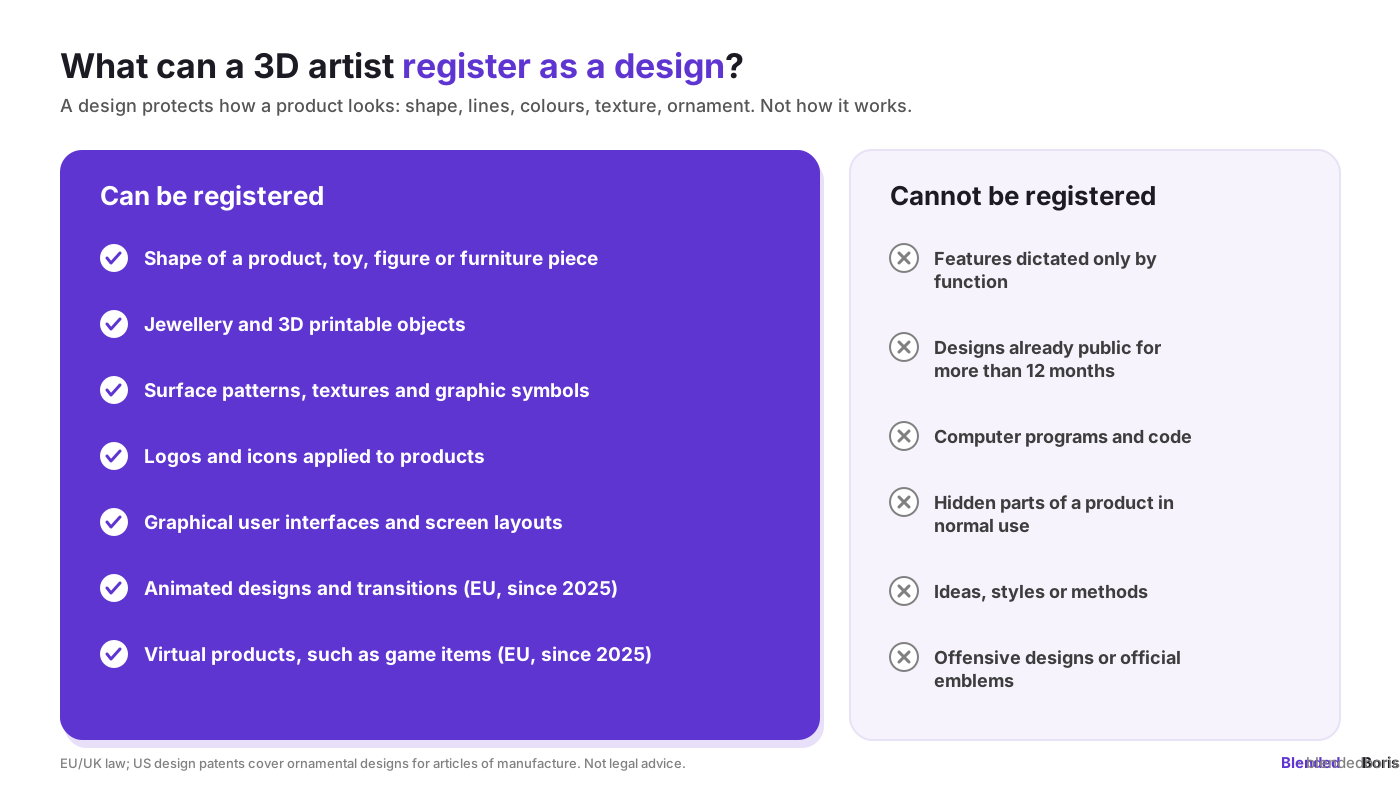
A registered design is an intellectual property right in the look of a product. It covers the features you can see: the shape and contours of a 3D model, the lines of a piece of jewellery, a surface pattern, a colour scheme, an icon or a screen layout. Once registered, you can stop others from making, selling, importing or using a product with a design that gives the same overall impression, whether or not they copied you. That last point is what separates design registration from copyright, which only stops copying.
Design law treats "product" broadly. In the EU, any industrial or handicraft item counts, including packaging, graphic symbols, typefaces, parts of complex products and, since the 2025 reform, non-physical products such as virtual items and graphical user interfaces. Computer programs themselves are excluded. For how designs sit next to copyright, patents and trademarks, see copyright vs trademark vs patent for digital artists and the overview of intellectual property rights.
What makes a design registrable?
In the EU and UK a design must be new, meaning no identical design was made available to the public before, and have individual character, meaning an informed user would get a different overall impression from it than from earlier designs. In the US a design patent needs a new, original and ornamental design for an article of manufacture that is not obvious. Since the Federal Circuit's 2024 decision in LKQ v. GM, examiners apply a more flexible obviousness test, so a design that only mixes familiar elements is harder to protect. Features that are solely dictated by technical function are excluded everywhere; what has no copyright covers the same line for copyright.
Registered vs unregistered design rights
Where to register a design: EU, UK, US or worldwide
Design rights are territorial: an EU design does not protect you in the US, and a US design patent does nothing in the UK. Pick the offices that match where you sell, where your products are manufactured and where copies are likely to appear. Many artists start with one office and use the 6-month priority period to extend the same filing to other countries at the same filing date.
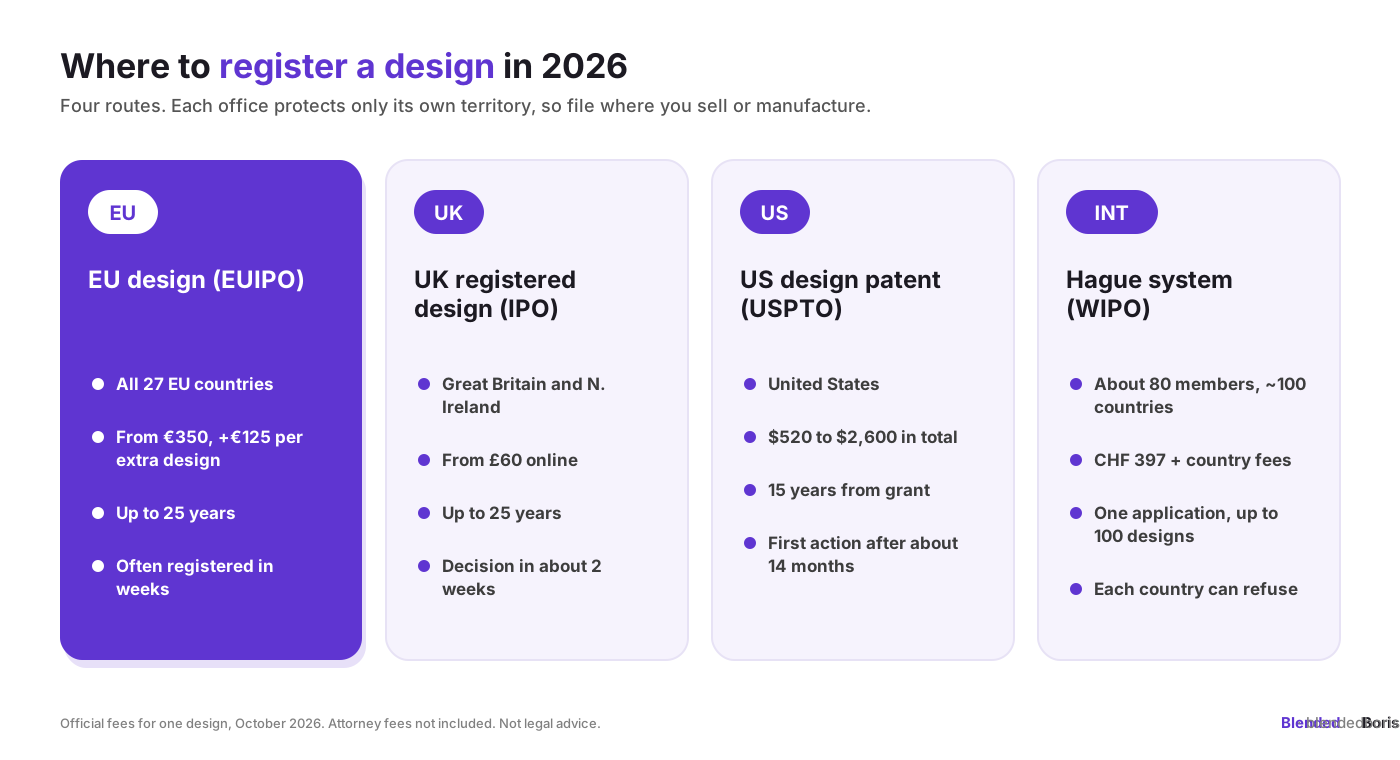
Small businesses pay less in the US: the same design patent costs $1,040 in total for a small entity and $520 for a micro entity. Renewal fees rise over time in the EU, from €150 at 5 years to €700 at 20 years per design, and in the UK from £85 to £170, so only renew designs you still sell.
How to register a design, step by step
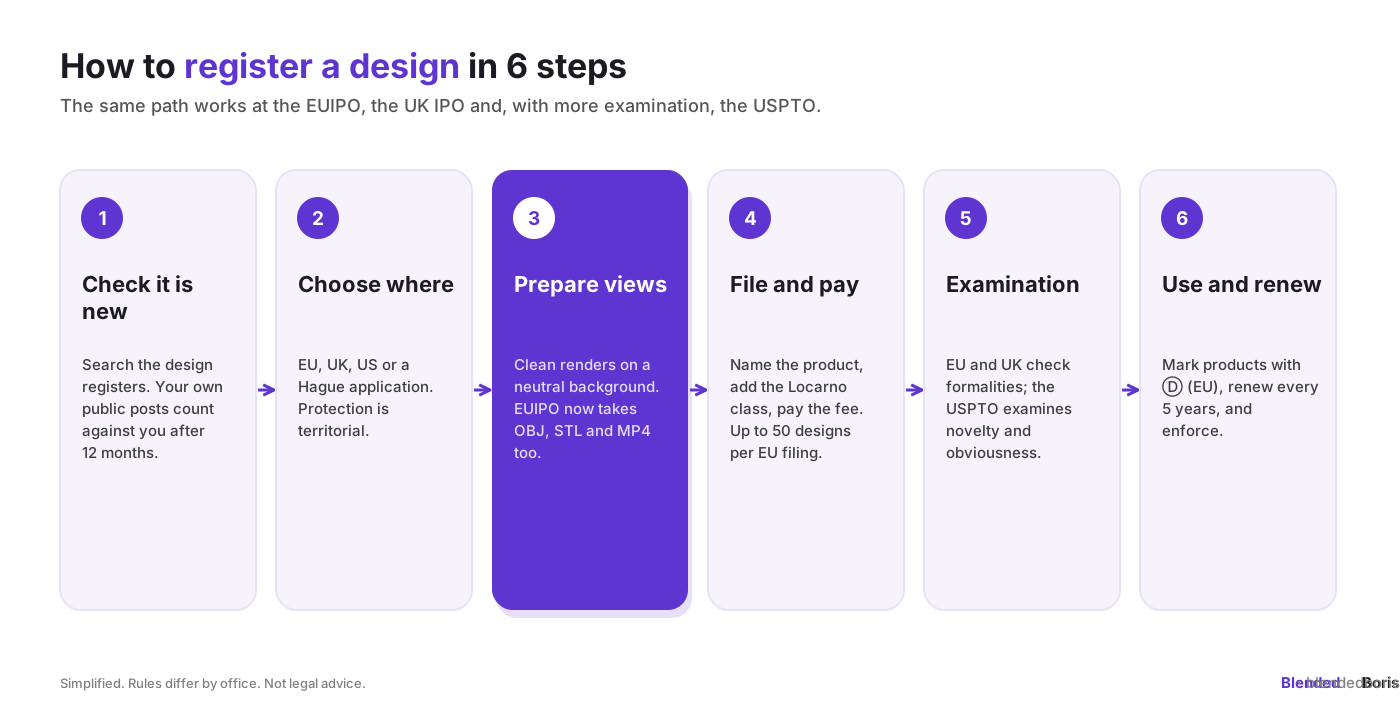
- Check that it is new. Search the EUIPO's DesignView, the UK IPO's design search and the USPTO's design patents. Also check your own posts: anything you showed more than 12 months ago is now prior art against you.
- Decide where to file. Choose the markets that matter. If you need several, a single Hague application can designate the EU, the UK, the US, Japan, China and many more.
- Prepare your views. Show only the design you want to protect, on a neutral background, from enough angles to show every feature. Exclude parts you do not claim with broken lines, blurring or colour, used the same way in every view.
- File and pay. Apply online and name the product the design is used on (for example "figurine", "ring" or "graphical user interface") with its Locarno class; in the EU the product name does not limit the design's scope, but it helps searches. The EU fee is now a filing date requirement, and one application can hold up to 50 designs from different classes.
- Examination. The EUIPO and the UK IPO check formalities and a few refusal grounds, then register. The USPTO examines novelty and obviousness, which usually means at least one office action.
- Use and renew. Mark your products, watch marketplaces for copies, and renew every 5 years in the EU and UK. US design patents need no renewal.
How to register a design in the EU (EUIPO)
An EU design, called a registered Community design until the reform, covers all 27 EU member states with one application filed online at the EUIPO. Since 1 July 2026, the last phase of the EU design reform is in force, and it changes how you file:
- 3D files and video are accepted views. Next to up to 10 JPEG views, you can now upload an OBJ or STL file (up to 20 MB) or an MP4 video for animated designs. A 3D file shows shape but not colour or texture, so use renders when those matter.
- Multiple applications are simpler. Up to 50 designs per application, from any Locarno class, at €125 for each design after the first.
- File at the EUIPO directly. National offices no longer forward EU design applications.
- Deferred publication needs a surrender. You can still keep a design secret for up to 30 months, but you must surrender any you do not want published.
Changes from the first phase, in force since May 2025, matter just as much for digital artists: the definition of a design now includes animation, products can be non-physical, and owners can mark products with the new design notice, a letter D in a circle (Ⓓ). Most importantly for anyone who sells STL files, an EU design now lets you stop others from creating, downloading, copying and sharing files that record your design for 3D printing. The EUIPO's design reform hub lists the details.
How to register a design in the UK
UK designs are registered by the Intellectual Property Office, online through the GOV.UK design service. Fees rose on 1 April 2026: £60 for one design online, rising in steps to £185 for up to 50 designs, and paper filings cost more. You upload images, name the product and can ask to defer publication. The IPO does not search for earlier designs before registering, so you usually get a decision in about 2 weeks; validity is only tested if someone challenges it.
Since Brexit, EU designs no longer cover the UK, so artists selling in both markets need both registrations. The UK also has two unregistered rights: the supplementary unregistered design, which lasts 3 years from first disclosure in the UK, and UK design right, which protects the 3D shape and configuration of an article for up to 15 years. The government consulted on simplifying this system in 2025; changes are expected from 2027, so check the rules before you rely on unregistered protection.
How to get a US design patent
The US has no "registered design". Its equivalent is the design patent, granted by the USPTO for a new, original and ornamental design for an article of manufacture. It lasts 15 years from grant with no maintenance fees, and you have 1 year after your own first public disclosure to file. Because each design patent covers one design, artists often file several applications for variations.
Drawings are the whole claim in a design patent: black-and-white line drawings or photographs from every side, with surface shading and broken lines for the parts you do not claim. Pendency improved in 2026: the USPTO reported in May that the average wait for a first action had dropped to 14 months. Digital work is easier to protect too. Guidance issued in March 2026 dropped the old requirement to draw a display screen around a graphical user interface or icon, and recognises projected, holographic and virtual or augmented reality interfaces as potentially patentable designs.
Registering a design in many countries: the Hague system
The Hague system run by WIPO lets you file one international application, in one language, with one set of fees, and designate any of its roughly 80 members, including the EU, the UK, the US, Japan, China and South Korea. You can include up to 100 designs if they belong to the same Locarno class. The basic fee is CHF 397 for one design plus CHF 50 for each extra design, a publication fee per image and a designation fee for each country. Each designated office then has 6 or 12 months to refuse protection under its own law, so a Hague filing is a shortcut to filing, not a guarantee. For engineering products, industrial design protection for CAD models explains how companies combine registrations with file security.
Preparing design views from Blender
Your views define what you own, so treat them like a final render. Offices judge the design only from what the views show. Here is how to export what each office accepts:
- Render orthographic views. Use an orthographic camera for front, back, left, right, top and bottom, plus one perspective view. Keep the same scale and lighting in every view.
- Match the claim to the views. If colour or a material is part of the design, render it. If not, use flat grey shading so you do not limit your design to one colourway.
- Export clean geometry. For an OBJ or STL filing, apply modifiers, remove hidden helper objects and check the file in a viewer before you upload it.
- Keep the source. Save the .blend file and every exported view with dated proof, so you can show later that the registered design is yours. See version control in Blender projects.
Design registration for 3D printing, games and digital products
3D printing is where design registration helps 3D artists most. Copyright in a printable model can be thin when the object is mostly functional, but a registered design protects its look whether someone copied your file or modelled a look-alike from scratch. In the EU you can now act against people who create, download, copy or share files that record your design for printing, not only against those who print and sell the object. If you sell on printing marketplaces, read selling STL files on Cults3D, Thingiverse and MyMiniFactory and the marketplace rules in Blender marketplace copyright policies.
Practical guides for the products themselves: jewellery models in Blender for 3D printing, functional 3D printed objects and how to protect CAD files from unauthorised 3D printing.
The design clock: disclosure, grace period and proof
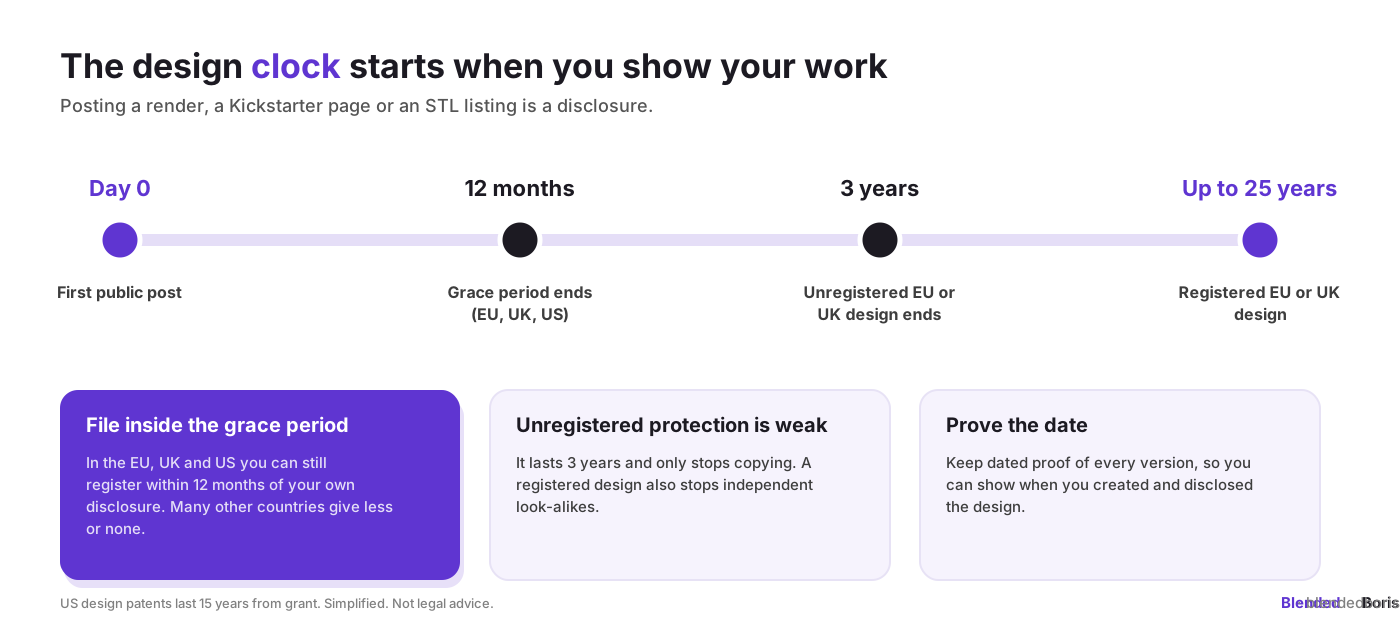
Posting a render on ArtStation, a Kickstarter page or a marketplace listing makes your design public. From that day you have 12 months to register in the EU, the UK and the US. Many other countries give a shorter grace period or none, so if China, for example, matters to you, file before you post anything. The rules on who was first differ between systems too; first-to-file vs first-to-invent in design rights explains the difference.
Unregistered rights depend entirely on evidence: you must prove what your design looked like, when you first disclosed it and that the other side copied it. A dated, tamper-proof record of every version is the simplest way to do that, which is why immutable proof of art creation matters even if you register later. The same records help if someone registers your design before you do and you need to show it was yours first.
Design registration vs copyright, patents and trademarks
The rights overlap. In the EU, the Court of Justice ruled in Cofemel (2019) that a design can also be protected by copyright if it is original, and in the US the Supreme Court's Star Athletica test decides when design features on useful articles get copyright; both are in copyright cases for 3D artists. Copyright registration follows different rules, covered in how to register copyright. For the technical side of a product, see intellectual patent rights, and for a plain comparison of all four rights, copyright vs trademark vs patent.
Prove when you created every design, for free. BlendedBoris is a free Blender plugin that records your 3D model on the blockchain and gives you a lifetime ownership certificate. It creates a digital fingerprint that links each version to you and fixes its date, which is the evidence unregistered design rights depend on and a strong backup for any design you register later.
👉 Get the free BlendedBoris plugin
Setup takes a few minutes: see the BlendedBoris plugin tutorial.
Common mistakes when registering a design
- Posting first, filing never. Once your own post is more than 12 months old, it destroys the novelty of your design in most countries.
- Filing renders that show too much. Props, logos and backgrounds in the views can become part of the design, which makes it narrower and easier to avoid.
- Mixing representations. In the EU, do not combine static views, a 3D file and a video for the same design; pick one type per design.
- Registering only one colourway. If colour is not essential, show the design in neutral shading so it covers every version.
- Expecting protection for function. A design registration will not stop someone using the same mechanism with a different look.
- Forgetting the UK after Brexit. EU designs no longer cover the UK, and UK designs do not cover the EU.
- Letting renewals lapse. EU and UK designs need renewing every 5 years; diarise the dates.
If a registration matters to your business, a design attorney can help draft the views and choose the offices; see when to hire an IP attorney as a digital artist. If a copy appears online, start with a takedown notice.
Design registration in numbers (2026)
Conclusion
To register a design, decide where you sell, prepare clean views of exactly what you want to own, and file before your first public post is a year old. For most 3D artists that means an EU design, now possible straight from an OBJ or STL export, a UK design if you sell there, and a US design patent for products that earn in the US. Keep dated proof of every version while you work, so you are protected before registration and can prove your claim after it.
This is general information, not legal advice. Fees and rules change; check the design office of your country before filing.
This is general information, not legal advice. Fees and rules change; check the design office of your country before filing.
FAQ: registering a design
How do I register a design?
Search the design registers to check it is new, prepare images that show the design, then file online at the EUIPO for the EU, the UK IPO for the UK or the USPTO for a US design patent, and pay the fee. A Hague application through WIPO covers many countries at once.
How much does it cost to register a design?
Official fees are €350 at the EUIPO, £60 at the UK IPO and $520 to $2,600 for a US design patent, depending on business size. Attorney fees, if you use one, come on top.
How long does design registration take?
The UK IPO usually decides in about 2 weeks and the EUIPO often registers within days or weeks. A US design patent takes much longer: about 14 months to a first action in 2026.
How long does a registered design last?
Up to 25 years in the EU and the UK, renewed every 5 years. A US design patent lasts 15 years from grant.
Can I register a 3D model as a design?
Yes, as the design of the product it represents, such as a figurine, a piece of furniture or a virtual item. In the EU you can even file the OBJ or STL file itself as the representation.
Can I register a design after posting it online?
In the EU, UK and US, yes, within 12 months of your own first disclosure. After that, your own post counts against you.
Is a design the same as copyright?
No. Copyright is automatic and only stops copying. A registered design must be applied for but also stops similar designs that were created independently.
Does an EU design protect me in the UK?
No. Since Brexit you need a separate UK registration, and the reverse is also true.
Can I register a game asset or interface?
In the EU, yes: virtual products and graphical user interfaces count as products. In the US, the 2026 USPTO guidance accepts interfaces and icons, including AR and VR interfaces, as designs for a computer.
What does the Ⓓ symbol mean?
It is the EU design notice, introduced by the 2025 reform. Owners of a registered EU design, or people with their consent, can use it on products to show the design is registered.


