
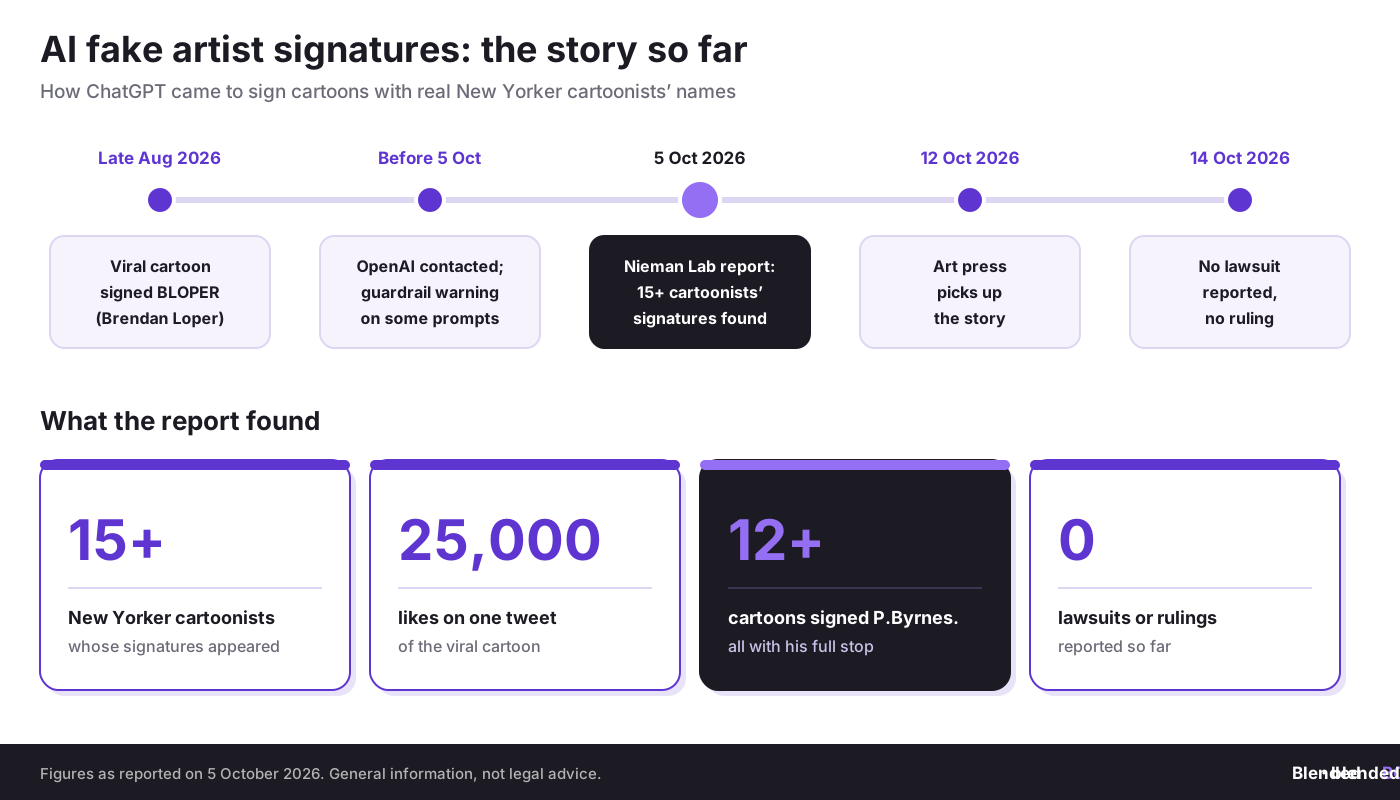
On 5 October 2026, Nieman Lab reported that ChatGPT has been adding the signatures of real New Yorker cartoonists to AI-generated cartoons those artists never drew. The reporter documented more than 15 cartoonists whose signatures appeared on ChatGPT images without permission or payment. A week later the story was still spreading through the art press.
It started with a viral cartoon of Dolly Parton and Tim Curry arriving at the gates of heaven. In the corner was the pen name BLOPER, the signature of New Yorker cartoonist Brendan Loper. Loper did not draw it. According to the report, a fan had asked ChatGPT for a New Yorker-style cartoon and posted the result on Facebook. Versions of it circulated on Twitter, Facebook, Instagram and Bluesky, and one tweet of it collected 25,000 likes. Loper first heard about it from his twin brother, then from strangers asking whether the cartoon was his.
For Blender artists, this is not a story about cartoons. It is a story about what a signature can and cannot prove. Many of us sign renders, stamp a logo in the corner or burn our name into the frame. If an image generator can reproduce a famous cartoonist's handwritten signature, it can reproduce your watermark too. Here is what happened, what the law says so far, and how to build proof of authorship that a generated image cannot copy.
TL;DR: AI fake artist signatures in one paragraph
Nieman Lab found ChatGPT signing generic cartoons with the names of real New Yorker cartoonists, including Brendan Loper, Pat Byrnes, Emily Flake and Harry Bliss. After the reporter contacted OpenAI, ChatGPT began showing a guardrail warning on some requests, but at publication it was still signing some cartoons with real names. No lawsuit over the signatures has been reported. The lesson for 3D artists: a visible signature or watermark is a mark, not proof. Keep your dated .blend files and versions, use metadata, timestamp important work and register what matters.
What did the Nieman Lab investigation find?
Reporter Andrew Deck traced the Parton and Curry cartoon back to ChatGPT, then went looking for more. In online forums he found images carrying the signatures of other well-known contributors, including Harry Bliss, Emily Flake, Joe Dator, Pat Byrnes, Peter Vey and Jason Adam Katzenstein. In his own tests, ChatGPT produced cartoons signed with the names of George Booth, Liza Donnelly, Ellis Rosen and Saul Steinberg. You can read the full report on Nieman Lab.
The detail is what makes it uncomfortable. Pat Byrnes has signed his cartoons "P.Byrnes." with a full stop since his first New Yorker cartoon in 1998. Deck found more than a dozen ChatGPT cartoons signed with Byrnes' name, and every one ended with the full stop.
“The signature for me is the certificate of authenticity.”
Brendan Loper, New Yorker cartoonist, speaking to Nieman Lab
How did OpenAI respond?
An OpenAI spokesperson told Nieman Lab that the company sees the future of creativity as fundamentally human and that it appreciates the community flagging bugs and unintended behaviour so it can address them. After the reporter notified OpenAI, ChatGPT started returning a warning on some New Yorker-style requests, saying the prompt may violate its guardrails on similarity to third-party content.
That warning did not end the problem. At the time of publication, ChatGPT was still signing some of its generic cartoons with real names. OpenAI declined to explain how its models came to reproduce the signatures. We have not seen independent testing since then, so treat any claim that the issue is fixed with caution.
Is a fake signature on an AI image illegal?
There is no court answer yet, and no lawsuit over these signatures has been reported. Three areas of law come up, and none is a sure fit.
Right of publicity
Cornell law professor James Grimmelmann told Nieman Lab that the cartoonists could have grounds for a right of publicity claim. That is state law protecting a person's name and identity from unauthorised use. It would need proof that the cartoons were used for a commercial purpose, not just as a joke or gag. The reporter found no evidence that the cartoons were being bought or sold.
False copyright management information
Under 17 U.S.C. §1202(c), copyright management information includes the name of the author. Section 1202(a) prohibits knowingly providing false copyright management information with intent to induce, enable, facilitate or conceal infringement. A forged signature looks like false author information, but the knowledge and intent requirements are demanding, and no court has applied them to an AI-generated signature. Our report on the NoAI tag ruling in Beaulier v. Roblox shows how hard §1202 claims are to plead against AI companies.
Copyright in the style itself
Copyright protects specific works, not a style. A cartoon that only looks like someone's work is a much weaker claim than a copy of a real drawing. That is why the signature matters so much here: it is the part that falsely says who made the image. For the general rules, see how to navigate AI art and copyright in Blender and our round-up of 30+ landmark copyright cases for 3D artists.
Prove your Blender work is yours, not just signed as yours.
BlendedBoris is a Blender add-on that timestamps your work on a blockchain, so you hold dated proof of authorship that a generated image cannot copy.
👉 See how BlendedBoris works
Why should Blender artists care about a cartoon signature?
Because the same habit protects most of our portfolios. Renders on ArtStation, turntables on social media and preview images on marketplaces usually carry a name, a logo or a watermark in the corner. That mark helps people find you when an image is shared without credit. What it cannot do is prove you made the image, because anyone, or any model, can put the same mark on something else.
The risk runs both ways. A generated image can carry your signature and damage your reputation, which is how Jason Adam Katzenstein described it to Nieman Lab:
“this is slop that’s pretending to be me.”
Jason Adam Katzenstein, New Yorker cartoonist, speaking to Nieman Lab
And a copy of your real render can have your signature cropped or painted out. In both cases, what settles the question is not the mark in the image but the evidence behind it: the source files, the dates and an independent record. If your work has already been taken, our guides on legal steps against AI art theft and writing a cease and desist letter cover the next steps.
Signature, watermark or proof: what actually shows you made a render?
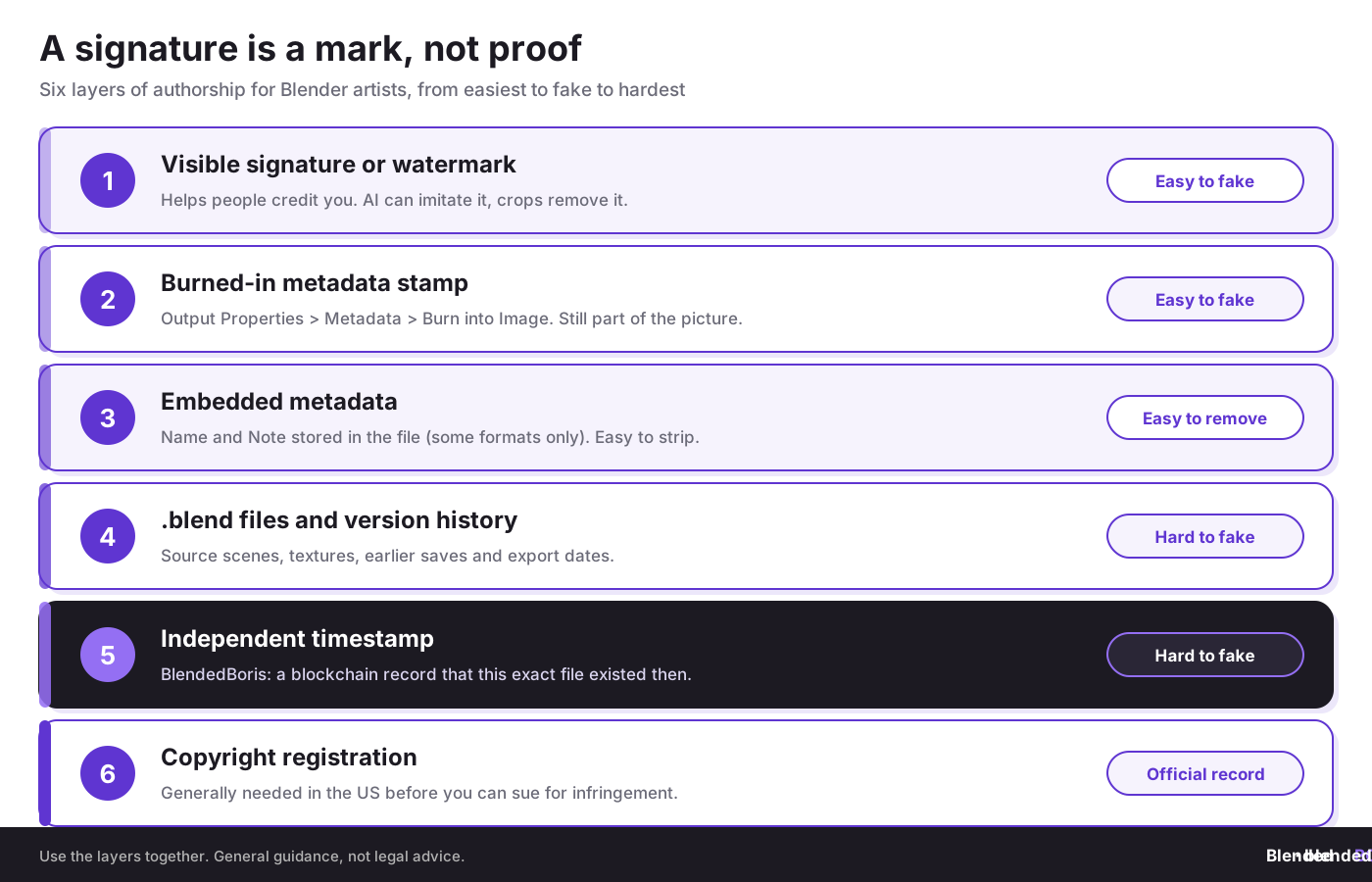
Think of authorship as layers. Each one is useful, and none is enough alone. The visible layers help people credit you; the hidden layers help you prove it when it counts.
- Visible signature or watermark. Good for credit when an image is shared. Easy to crop, and as this story shows, easy for a model to imitate.
- Burned-in metadata stamp. In Blender, Output Properties > Metadata lets you add fields such as date, frame, scene and a custom Note, and Burn into Image writes them onto the render as text. Useful, but still part of the picture.
- Embedded metadata. Some formats store the same fields inside the file without changing the pixels. Only some image formats support it, and it is easy to remove or edit. Our guide to Blender metadata and watermarking compares the options.
- Source files and version history. Your .blend files, earlier versions, textures and exports are strong evidence because a generated image has none of them. See how to protect Blender models from theft.
- Independent timestamp. A hash of your file recorded on a blockchain is a tamper-evident record that this exact file existed at a given time. We explain the idea in immutable proof of art creation.
- Registration. In the US, registering a work is generally needed before you can sue for infringement. Our step-by-step guide to registering copyright and the overview of art registration and provenance explain how.
What should Blender artists do now?
- Keep signing your renders. A clear signature or watermark still helps people credit you when an image travels. Our copyright notice templates for 3D artists give you wording.
- Turn on the Metadata panel in Output Properties for final renders. Add your name and licence in the Note field, and use Burn into Image when you want it visible.
- Save your source files and versions. Keep the .blend files, earlier saves, export dates and listing screenshots for every piece you publish.
- Timestamp important work before you post it, so you have a dated, independent record that a generated image cannot copy. Weigh the pros and cons in blockchain copyright registration benefits and drawbacks.
- Opt out of AI training where you can, on every platform that offers it. Our steps to opt out of AI training datasets and how to protect your art from AI training show where the settings are.
- Search for your own name and mark. If you find images signed with your name that you did not make, save the evidence with dates and URLs before you report them.
- Know which right fits. A fake signature can touch copyright, your name and your brand. Our guide to copyright vs trademark vs patent for digital artists helps you tell them apart.
How does this fit the bigger picture of creative data and proof?
The signature story is one sign of a wider shift: files, names and designs are moving into places their creators never agreed to, and proof of origin is becoming the deciding question. Our sister sites covered the same theme in engineering this week.
- Insider threats. On cadchain.com, the OpenAI recording device case looks at an engineer charged with hiding a recorder in an executive meeting room, and what it teaches deep-tech teams about insider threats to their IP.
- CAD files as ransom loot. On solidboris.com, ransomware groups listing CAD drawings as loot covers the October 2026 Interlock claims and how SOLIDWORKS teams can protect and prove their designs.
- 3D models as trade secrets. On borisinventor.com, 3D model files as trade secrets explains a court ruling that held an engineer and his new employer liable over 3D model files and drawings, and what evidence won.
Whether you sculpt characters or design machine parts, the pattern is the same: the people who can show dated, original files are the ones who can defend their work.
Conclusion
ChatGPT signing real cartoonists' names to cartoons they never drew is a small story with a big lesson. A signature tells people who to credit, but it is no longer evidence of who made an image. OpenAI has added a partial guardrail, the legal routes are untested, and no court has ruled. For Blender artists, the practical answer is to keep signing, and to back every signature with source files, metadata, an independent timestamp and, for important work, registration.
Back your signature with proof.
BlendedBoris records a blockchain timestamp of your Blender files from inside Blender, so you have dated proof of authorship alongside your source files and registration.
👉 Get started with BlendedBoris
FAQ: AI fake artist signatures
What did Nieman Lab report about ChatGPT and cartoonists' signatures?
On 5 October 2026, Nieman Lab reported that ChatGPT had produced AI-generated cartoons signed with the names of real New Yorker cartoonists. The reporter documented more than 15 cartoonists, including Brendan Loper, Pat Byrnes, Emily Flake and Harry Bliss.
Has OpenAI fixed the problem?
Partly, as of the report. After being contacted, ChatGPT began showing a guardrail warning on some New Yorker-style requests, but it was still signing some generic cartoons with real names at publication. OpenAI did not explain how its models learned the signatures.
Is it illegal for an AI to add a real artist's signature?
No court has ruled on it, and no lawsuit over these signatures has been reported. Possible routes include a state right of publicity claim, which would need commercial use, and the US rule against false copyright management information, which needs knowledge and intent.
Can AI copy my render watermark or signature?
It can. This case shows an image generator reproducing handwritten signatures down to small details such as a full stop. Treat a visible mark as a credit line, not as proof that you made the image.
How do I add my name to renders in Blender?
Open Output Properties > Metadata, choose the fields you want and type your name and licence into the Note field. Enable Burn into Image to write the metadata onto the render as text. Only some image formats store metadata inside the file.
What is the best proof that I made a 3D artwork?
Several layers together: your .blend source files and version history, embedded metadata, an independent timestamp of the files and, for important work, copyright registration. A generated image has none of the source files behind it.
Does a blockchain timestamp replace copyright registration?
No. A blockchain timestamp, like the one BlendedBoris creates, is tamper-evident proof that a specific file existed at a specific time. In the US, registration is generally still needed before you can sue for infringement, so use both.


