
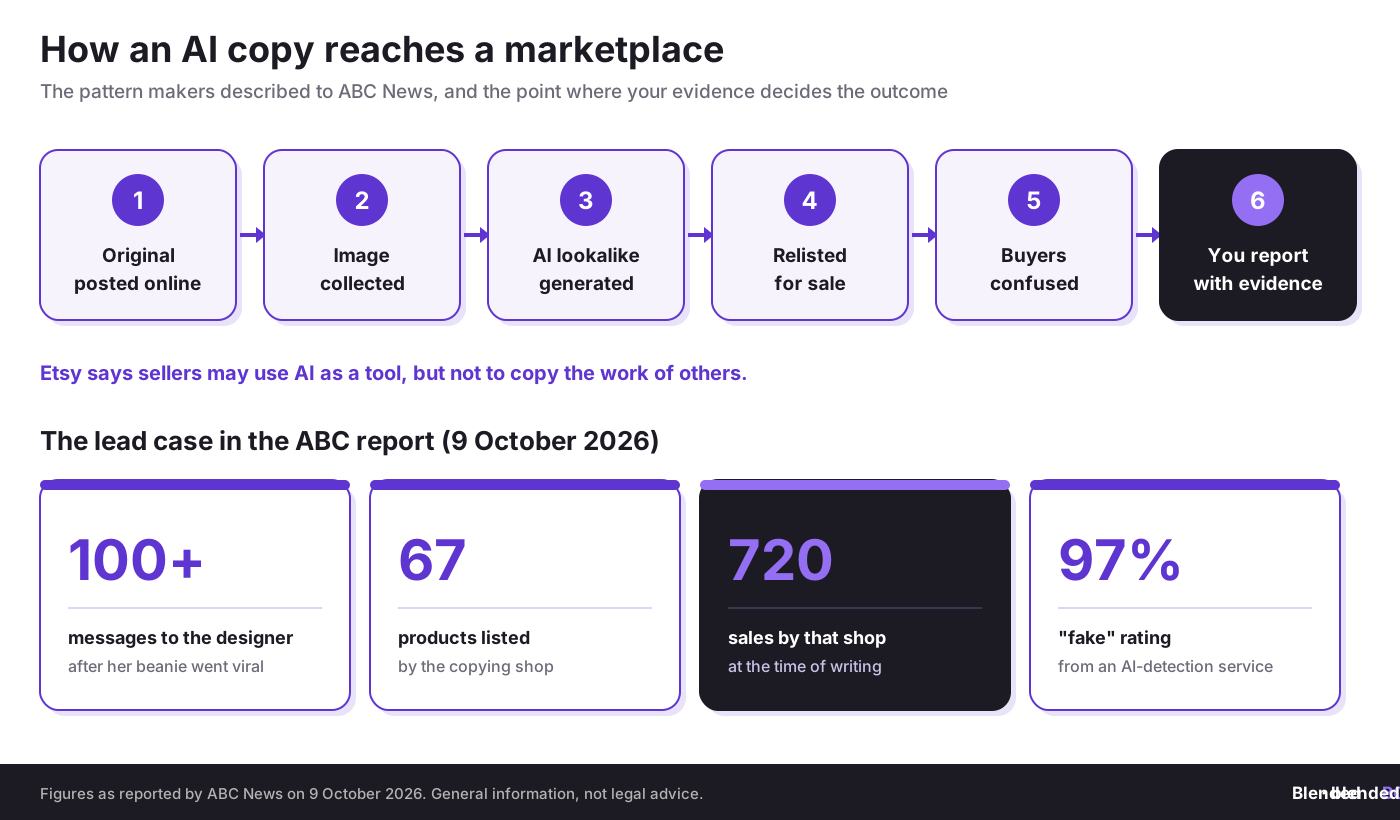
On 9 October 2026, ABC News in Australia reported that makers say Etsy, once the home of handmade goods, is now overrun with AI-generated copies of their work. The lead case: a 21-year-old crochet designer from Hobart found another Etsy shop selling an AI-made version of her viral beanie pattern, illustrated with AI-generated images. Etsy told the ABC that its rules already forbid this, and that it has more work to do on enforcement.
The designer, Lucy Cooper, created a spiral beanie inspired by 90s surfwear. After it went viral, she told the ABC that more than 100 people messaged her about it, and buyers pointed her to the copy. At the time of writing, the copying shop had 67 products and 720 sales. The ABC ran images from two of its products through an AI-detection service, which rated them 97 per cent fake. The ABC said it had contacted the seller and did not report a reply, and it did not report whether the listing had been taken down.
Cooper is not alone. The same report quotes a rug maker and a UK wall-art studio with similar complaints, and a few days earlier a Disney-inspired apparel brand, The Lost Bros, posted side-by-side comparisons of its designs next to AI remakes sold on Etsy. None of these cases involves Blender. But the pattern applies directly to 3D artists who sell renders, prints, STL files or 3D-printed pieces: if a picture of your work is online, it can be fed to an image generator and relisted as a lookalike in minutes. Here is what happened, what Etsy's rules say, and how to build the evidence you need before it happens to you.
TL;DR: Etsy AI copies in one paragraph
ABC News reported on 9 October 2026 that makers are finding AI-generated copies of their designs on Etsy, including an AI version of a Hobart designer's viral crochet beanie sold by a shop with 720 sales. Etsy says sellers may use AI as a tool but not to copy the work of others, and admits enforcement at its scale is complex. For 3D creators, the lesson is practical: you cannot stop every copy, but you can make each takedown fast and convincing. Keep your .blend files and version history, put your name inside the files you sell, keep dated listing screenshots, and timestamp or register the designs that earn money.
What did the ABC find on Etsy?
The report, by Ebony ten Broeke, is available in full on ABC News. Its core points:
- A viral design, then a copy. Cooper's beanie pattern was remade with AI and sold by another Etsy store using AI-generated product images.
- The copy sold. The shop had 67 products and 720 sales when the ABC checked. That figure covers the whole shop, not only the copied pattern.
- The images looked machine-made. An AI-detection service rated images from two of the shop's products 97 per cent fake. Detection tools are not proof on their own, but they add to the picture.
- Speed is the new problem. A UK wall-art studio told the ABC that AI makes it easy to copy someone else's work at the click of a button, and one social media influencer said they made a print in about 12 minutes using AI.
- The law lags. Melbourne law professor Jeannie Paterson told the ABC that copyright is clumsy when applied to AI.
“There's a big difference between being inspired by something and completely copying it without someone's permission.”
Lucy Cooper, crochet designer, speaking to ABC News, 9 October 2026
What does Etsy say about AI-made copies?
Etsy's vice-president of customer operations, James Ossman, gave the ABC a statement. He said the company's standard is centred on human creativity, that standards are only meaningful when they are enforced, and that doing that across a marketplace of Etsy's scale is complex. Etsy says it is improving how it identifies and removes listings that do not belong.
“Sellers may use AI as a tool, but not to deceive buyers, misrepresent an item, or copy the work of others.”
James Ossman, Etsy vice-president of customer operations, statement to ABC News
That matches the framework Etsy introduced in July 2024, its Creativity Standards. Every item must fit one of four labels: Made by, Designed by, Handpicked by or Sourced by the seller. Items made with the help of AI tools belong under Designed by, and sellers must say in the listing when AI was used. In other words, AI as a tool is allowed; copying is not. The gap the makers describe is enforcement, not the rule itself.
Why does this matter for 3D artists and Blender sellers?
Etsy is a real sales channel for 3D creators: 3D-printed miniatures and jewellery, digital STL downloads, render prints and posters. If you sell there, or on STL marketplaces such as Cults3D, Thingiverse and MyMiniFactory, the copy risk looks a little different from crochet.
Etsy's original-design rule for 3D prints
On 10 June 2025, Etsy quietly removed the words "or using a templated design or pattern" from its definition of items Made by a Seller. As TCT Magazine reported, that means 3D-printed items sold under Made by must come from the seller's own design; a commercial licence for someone else's file is no longer enough. For original 3D designers this cuts both ways. Resellers of your licensed files lose a route, which protects you. But it also means the question "who designed this?" now decides whether a 3D-printed listing may stay up, so the designer who can prove authorship has the stronger hand.
A render is all a copier needs
An AI lookalike does not need your .blend or STL file. A product photo or turntable render is enough to prompt a generator for a similar-looking image, which can then be sold as a print or used to advertise a knock-off. That is why the evidence you keep should cover both the image and the 3D source behind it. Our guide to protecting Blender models from theft explains the prevention side, and recourses for AI art theft covers your options once a copy appears.
Keep dated proof of every Blender design you sell.
BlendedBoris is a Blender add-on that timestamps your work on a blockchain, so you have independent, dated proof of authorship before you list, share or sell.
👉 See how BlendedBoris works
What should you do if you find an AI copy of your work?
Most marketplaces, Etsy included, have an intellectual property reporting process for rights holders. A strong report is short, specific and backed by evidence. Before you file:
- Capture the listing. Save the URL, take dated screenshots of the listing, shop name, images and price. Listings can vanish once the seller notices.
- Line up your originals. Put your first publication, your source file and the copy side by side. A dated .blend with version history is far more convincing than a finished image alone.
- Check what is actually copied. Copyright protects your expression, not an idea or a style. A report works best when it points to specific copied elements. Our explainer on whether 3D models automatically have copyright sets out the basics.
- Use the platform's process first. Our DMCA takedown guide for Blender artists and the walkthrough of DMCA takedown procedures show what to include.
- Escalate only if needed. If the platform route fails, a cease and desist letter or legal advice may be next. See legal remedies for digital art infringement for the options.
How can Blender artists build proof before a copy appears?
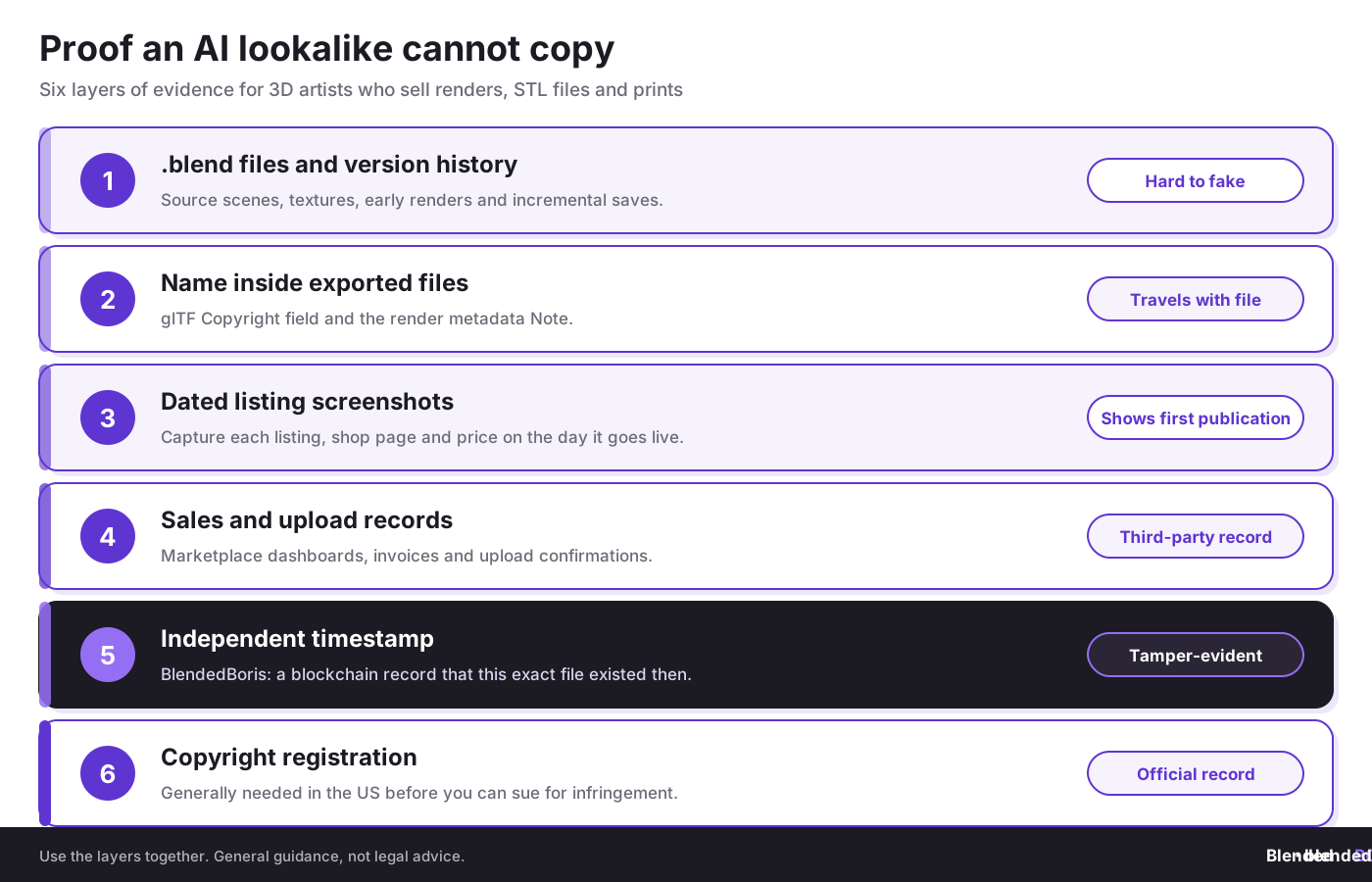
You cannot stop a determined copier from looking at a public image. What you can control is how quickly you can prove you were first. That proof is built in layers, ideally from the day you start a project.
1. Keep source files and versions
Save .blend files with incremental versions and keep your textures, references and early renders. A copier with an AI image has no scene file, no topology and no history. Your workspace is your best witness.
2. Put your name inside the files you share
When you export with File > Export > glTF 2.0, fill in the Copyright field so your name and licence travel inside the file. For renders, Output Properties > Metadata lets you add a Note with your name and licence. Our guide to Blender metadata and watermarking covers more options, and our copyright notice templates give you wording to copy. Metadata can be stripped, so treat it as one layer, not the whole defence.
3. Keep dated listing records
Screenshot each listing when it goes live and keep your sales and upload records. They show when your design reached the public, which matters when a copy appears months later.
4. Timestamp and register the designs that earn money
A hash of your file recorded on a blockchain gives a tamper-evident record that a specific file existed at a specific time. We explain the idea in blockchain copyright registration benefits and drawbacks. It complements formal registration rather than replacing it: in the US, registration is generally required before you can sue over a US work. Our guides show how to register copyright and how art registration and provenance records work.
Where does this leave AI tools on marketplaces?
Etsy's position is that AI is a tool, and plenty of 3D artists use AI somewhere in their pipeline. The issue the ABC report raises is not AI use as such but undisclosed AI copies of other people's work. That echoes our recent news on ChatGPT adding real cartoonists' signatures to AI cartoons: a visible mark of authorship is easy to imitate, while source files and dated records are not. It also connects to the NoAI tag ruling in Beaulier v. Roblox, where a platform tag on a listing page did not travel with the 3D files. For a wider view of the platforms and their rules, compare Blender marketplace copyright policies and our 3D marketplace fee comparison, and read the overview of selling 3D models on our blog.
What should 3D sellers do now?
- Search for your own work. Run reverse image searches on your best-selling renders and product photos, and search marketplaces for your product names.
- Archive your sources. Back up .blend files, version history, textures and early renders in at least two places.
- Embed your authorship in exported files and renders: the glTF Copyright field and the render metadata Note.
- Screenshot every listing on the day it goes live, and keep sales and upload records.
- Timestamp or register the designs that bring in money, before you publish them.
- Prepare a takedown template with your evidence links, so you can report a copy within minutes. See our guide to legal steps to prevent AI art theft.
How does this fit the bigger picture of AI and creative data?
The Etsy story is about who can prove what they made. Across our sister sites this week, the same question shows up in engineering and design software:
- Trade secrets and departing staff. In Apple v. OpenAI, a judge said Apple is highly likely to win a preliminary injunction and OpenAI agreed not to use the disputed information. Read what hardware teams must do about departing engineers on cadchain.com.
- Licences as evidence. The Delhi High Court stopped Chakr Innovation from using unlicensed SOLIDWORKS after 160 Phone Home hits. Our sister site explains what the SOLIDWORKS piracy injunction means for licences and design evidence on solidboris.com.
- Security of design tools. Autodesk's ADP Desktop SDK sent sensitive data in clear text. See what Inventor teams should patch on borisinventor.com.
Whether you sculpt in Blender or design parts in CAD, dated records of your own work are what turn a dispute from your word against theirs into a quick decision.
Conclusion
The ABC report shows how cheap copying has become: a viral design, an image generator and a shop front are all it takes. Etsy's rules already ban copying the work of others, and the company says it is improving enforcement, but it is the creator who has to spot the copy and prove the claim. For Blender artists who sell, that means keeping source files and versions, putting your name inside your files, recording listings, and timestamping or registering the designs that matter, before anyone else lists them.
Timestamp your Blender designs before you list them.
BlendedBoris records a blockchain timestamp of your Blender files from inside Blender, giving you dated proof of authorship to back up any marketplace report.
👉 Get started with BlendedBoris
FAQ: Etsy AI copies and 3D artists
What did ABC News report about Etsy on 9 October 2026?
That makers say Etsy is overrun with AI-generated copies of their work. The main example was a Hobart crochet designer whose viral beanie pattern was remade with AI and sold by another Etsy shop with 67 products and 720 sales at the time.
Does Etsy allow AI-generated products?
Yes, as a tool. Etsy says sellers may use AI but not to deceive buyers, misrepresent an item or copy the work of others. Under its Creativity Standards, AI-assisted items fall under Designed by, and sellers must disclose AI use in the listing.
Can I sell 3D prints of someone else's STL file on Etsy?
Since Etsy changed its Made by a Seller definition on 10 June 2025, 3D-printed items in that category must come from the seller's own design. Trade press reported that a commercial licence for a third-party file is no longer enough. Check Etsy's current policy before listing.
Is an AI lookalike of my render copyright infringement?
It depends on what was copied. Copyright protects your specific expression, not a style or an idea. A lookalike that reproduces recognisable elements of your work is a much stronger case than one that only shares a theme. Get legal advice for anything significant.
How do I report an AI copy of my 3D work on a marketplace?
Use the platform's intellectual property reporting process. Include the listing URL, dated screenshots, your original publication and your source files or version history as evidence that you created the work first.
Does a blockchain timestamp stop people copying my work?
No. Nothing stops a determined copier from seeing a public image. A timestamp, like the one BlendedBoris creates, gives you independent, dated proof that your file existed at a given time, which makes your report or claim faster to prove.
Do I still need copyright registration?
For US works, registration is generally required before you can sue for infringement, and timely registration unlocks statutory damages. A timestamp complements registration; it does not replace it.


